
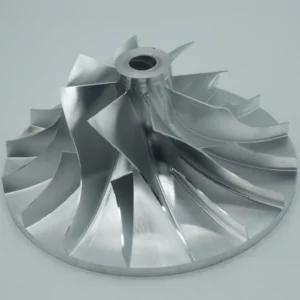
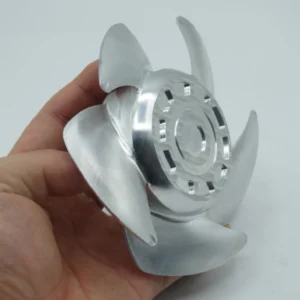
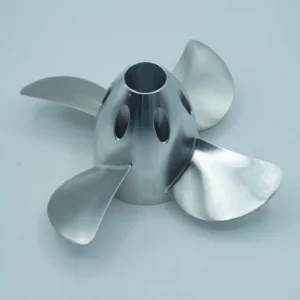
China CNC machining pays off when you can specify the part completely: a defined geometry in a standard grade such as 6061-T6 aluminum, 316L stainless, or PEEK; tolerances you can verify; and a quantity suited to the supplier’s confirmed capacity. It does not pay when the design is still changing weekly, when export rules restrict the part, or when freight and duty on a low-value heavy part erase the price gap. This guide covers what to send, what to ask for, and where the hidden costs sit — so you compare on scope, not on a single unit price.
China CNC Machining at JXD — Quick Fit Check
If you are sourcing CNC machined parts from China, the first question is not only price. The first question is whether the supplier can review the drawing, control the critical dimensions, document the result, and ship under a defined scope. Use this quick check before sending an RFQ.
| Buyer question | JXD answer |
|---|---|
| Best-fit orders | CNC prototypes, pilot runs, precision turned and milled parts, Swiss-type parts, wire EDM features, and low-volume batches. |
| Materials | Aluminum, stainless steel, steel, titanium, copper alloys, PEEK, POM, PTFE, PA, PEI, PAI, ceramic, and project-specific materials. |
| Tolerance capability | Down to ±0.005 mm when geometry, material, setup, and inspection method allow. |
| MOQ | 1 piece. |
| Prototype lead time | Usually 7–14 days; fastest 3 days after drawing, material, finish, and capacity review. |
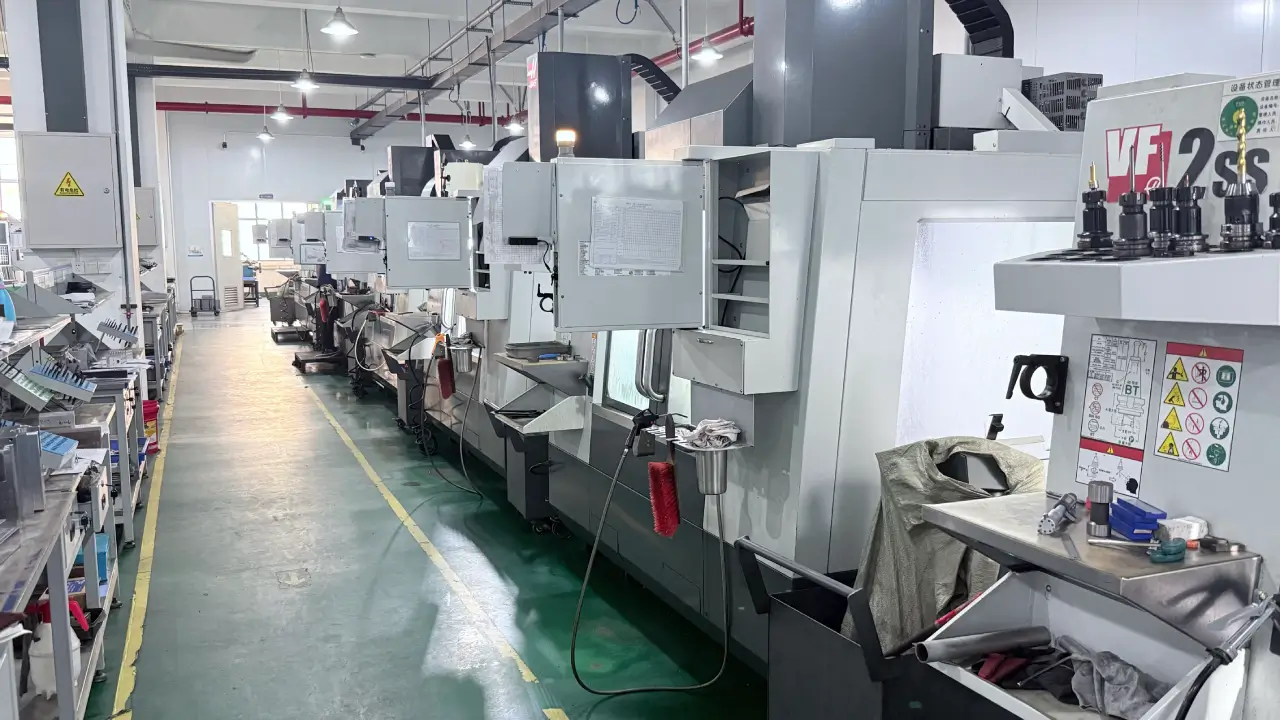
| Machines | 100+ machining machines covering CNC milling, turning, Swiss-type machining, wire EDM, and secondary operations. |
| Quality documents | FAI, CMM report, MTR, CoC, RoHS/REACH documents available when specified in the RFQ. |
| Best first step | Send STEP + 2D PDF so engineering can review geometry, tolerance stack, material, finish, and inspection scope before quoting. |
Need a scope-matched quote? Send the STEP file and 2D drawing, and JXD will review the RFQ for manufacturability, tolerance risk, inspection scope, and delivery path.
China CNC Machining Services We Actually Quote
JXD is not a parts marketplace. Your RFQ is reviewed by an engineering and project team before quotation. We quote CNC milled parts, CNC turned parts, Swiss-type precision parts, wire EDM features, and machined components that require surface finishing and return inspection.
| Service | Typical fit | What to specify in the RFQ |
|---|---|---|
| CNC milling services | Housings, brackets, plates, impellers, heat sinks, and fixture components. | Material grade, datum scheme, critical flatness or parallelism, surface finish, and inspection method. |
| CNC turning services | Shafts, bushings, sleeves, threaded parts, and cylindrical components. | OD/ID tolerance, concentricity, thread standard, surface roughness, and burr limits. |
| Swiss CNC machining services | Small pins, probes, long slender turned parts, and miniature precision components. | Diameter, length-to-diameter ratio, cross-hole features, thread form, and inspection gauge. |
| Wire EDM features | Sharp internal corners, hard materials, precision profiles, and tight slots. | Material hardness, cut path, tolerance, recast-layer concern, and surface requirement. |
| Secondary operations | Anodizing, plating, passivation, bead blasting, and other finish requirements. | Finish standard, coating thickness, masked areas, color tolerance, and cosmetic class. |
What Belongs in a China CNC Program (and What Does Not)
Good fits
- One-off prototypes, pilot runs, and repeat batches in common grades such as 6061-T6, 7075-T6, 316L, Ti-6Al-4V, PEEK, and POM. Batch capacity and material availability must be confirmed per project.
- Parts with a revision-controlled drawing, GD&T callouts, and a defined material spec.
- Multi-process parts that combine machining with anodizing, plating, bead blasting, or other secondary operations. JXD coordinates these stages through one project workflow; external finishing is followed by return inspection at JXD.
- Projects where one DFM pass on the STEP file removes setups or loosens tolerances before you commit tooling.
Caution fits
- High-value single parts where a rejection means re-running the whole loop. A sample-and-inspect step before production is not optional here.
- First orders in general: insist on sample approval and inspection records before mass production starts.
Not fits
- ITAR or export-restricted components.
- Regulated medical or automotive production when the factory’s quality-system scope has not been verified. Ask for certificates, audit the scope, and assume nothing.
- Parts with no 2D, no material grade, or no tolerances. The DFM back-and-forth will eat the price advantage.
- Heavy, low-value parts (cast-iron housings, large brackets) shipped by air: freight and duty can consume the entire savings.
What a China CNC Quote Actually Covers
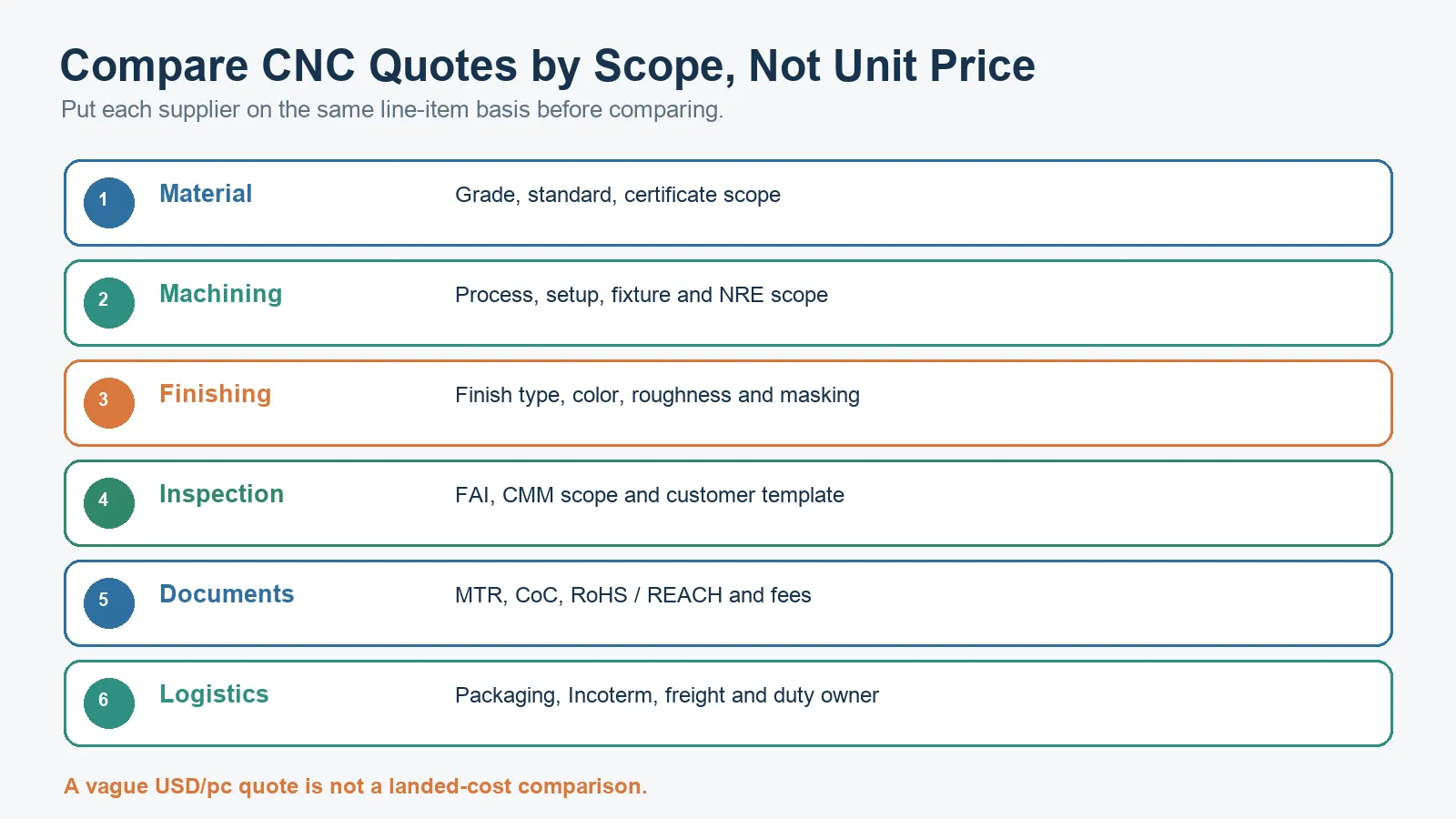
Most “how much does CNC machining cost in China” searches fail because two quotes rarely cover the same scope. Push every quote into this structure:
| Line item | What the quote should state | Where it sits |
|---|---|---|
| Material | Grade + spec, e.g. 6061-T6 per ASTM B221; whether a mill cert is included | In the part price |
| Machining | Process (3/4/5-axis milling, turning, Swiss, wire EDM) and the basis of pricing | In the part price |
| Surface finish | Finish type and target, e.g. MIL-A-8625 Type II anodize black, or Ra 0.8 µm on sealing faces | Usually in the part price |
| Inspection | FAI report, CMM report, in-process inspection | State the required scope in the quote |
| Documentation | MTR, CoC, RoHS/REACH declarations | On request — some documents charged |
| Tooling / NRE | Programming, fixtures, first-article work | Quoted separately if any |
| Packaging | Export cartons, wooden case, labels, rust-preventive oil | Included or itemized |
| Freight | Incoterm (EXW / FOB / CIF / DAP), mode, carrier | Quoted separately |
| Duties and clearance | HTS classification + destination-country rate | Buyer side — verify with your broker |
Rule: a quote that lists only “CNC machining — USD X/pc” is not comparable to anything. Every line above belongs in writing before you compare suppliers.
Total Landed Cost: the Components You Actually Price
Do not compare quotes. Compare landed cost. The components, without inventing numbers:
- Part price — material, machining, finishing, inspection (the only number in the quote).
- Tooling / NRE — programming, fixtures, first-article work; one-time, should be stated as such.
- Inland freight in China — factory to port or airport; small but real.
- International freight — express, air, or sea, priced per kg or per CBM. Ask for the freight quote at the same time as the part quote.
- Cargo insurance — confirm coverage, exclusions, and the quoted premium with your forwarder.
- Customs duties and fees — duty depends on the HTS classification and the destination country’s tariff schedule. Finished parts and unfinished parts can classify differently. Verify the current rate and confirm with your customs broker before you commit. We do not publish duty estimates because the correct answer changes with your classification, country, and trade agreement.
- Payment and transfer fees — wire fees, FX conversion.
- Verification costs — third-party inspection, pre-shipment audit, or your travel.
- Rework buffer — what a remake costs in time, covered by the spare-material mechanism below.
The cheapest unit price with the vaguest scope is the most expensive part you will buy. That is the single most useful thing to know before contacting a China CNC machining supplier.
The RFQ Package That Gets a Usable Quote
A complete RFQ gets a DFM review instead of a rubber-stamp quote. Send these nine items:
- STEP file + 2D PDF with GD&T and a revision block. If your file package is incomplete, use our STEP file guide for engineers before requesting a quote.
- Revision level and change history — the factory machines what the paper says.
- Material grade + spec (6061-T6, 316L, PEEK 450G) and whether an MTR is required.
- Surface finish callout — e.g. MIL-A-8625 Type II anodize black, bead blast, or Ra 0.8 µm on sealing faces.
- Quantity — and annual volume if it differs.
- CTQ list — which dimensions are functional, with tolerances and datums. Tighter-than-needed tolerances on non-mating features only raise scrap rates and cost.
- Required inspection documents — specify FAI, CMM results, or your own inspection template according to project requirements.
- Destination and Incoterm preference.
- Compliance requirements — RoHS, REACH, packaging marks.
How to Compare China CNC Machining Suppliers
A supplier comparison should not stop at unit price. For precision CNC parts, the safer comparison is quote scope, engineering response, inspection evidence, document control, and delivery responsibility.
| Factor | Weak answer | What to ask for instead |
|---|---|---|
| Price | “Cheapest CNC machining.” | A scope-matched quote covering material, machining, finish, inspection, documents, packaging, and freight. |
| Quality | “High precision.” | FAI/CMM sample report and measurement method for CTQ dimensions. |
| Certification | “ISO certified.” | Certificate name, scope, expiry date, and whether your part type is covered. |
| Lead time | “Fast delivery.” | DFM date, sample date, production date, finishing date, and shipping date. |
| Communication | “24/7 service.” | One responsible project owner and written revision confirmation. |
| Rework | “Quality guaranteed.” | A nonconformance process covering remake, re-inspection, photos, and report approval. |
Risk Control: What Can Go Wrong, and the Control
| Risk | Control | Evidence to ask for |
|---|---|---|
| Material substitution | State the exact grade and require written approval before any change | MTR or other agreed material record |
| Tolerance failure | Review the tolerance stack before quoting; define FAI and CMM scope for CTQ features | FAI/CMM report data |
| Finish drift (anodize color, Ra) | Finish spec in writing; first-piece finish sample; photo records | Finish sample, photos |
| Version confusion | Revision-controlled 2D; revision confirmed in writing | Signed revision confirmation |
| Delay | Per-project schedule: DFM → sample → production → freight, with dates | Written schedule |
| Communication gaps | One point of contact; written confirmation after every call | Email trail |
| Freight / duty surprises | Incoterm agreed at quote stage; HTS checked with your broker | Quote stating the Incoterm |
| First-order rejection | Spare-material mechanism (below); remake + re-inspection | Remake records, re-inspection data |
Proof to Request Before the First Order
Before approving a China CNC machining supplier, ask for evidence, not promises. The proof package should match the risk level of the part.
- A sample FAI or CMM report with actual measured values.
- Material certificate or agreed material record for the selected grade.
- Photos of similar machined parts, especially after surface finishing.
- Written confirmation of drawing revision and CTQ dimensions.
- Packaging and rust-prevention plan for steel or long-distance shipping.
- Clear rule for remake or rework if the first article fails inspection.
Quality Evidence: What to Demand, and What Costs What
- FAI and CMM reports are available when specified in the RFQ and quotation. Agree which dimensions require actual values and which measurement method applies.
- MTR / CoC / RoHS / REACH are available on request. Some documents carry a charge — confirm which ones are included in the quote before you approve it.
- Customer inspection templates: we fill in your format if you have one. You do not have to adapt to the factory’s paperwork.
- If the RFQ names a functional dimension, the report should show the result for that feature. Use the CNC machine shop supplier audit guide to verify inspection and process capability before ordering.
How a First Order Actually Runs (JXD Workflow)
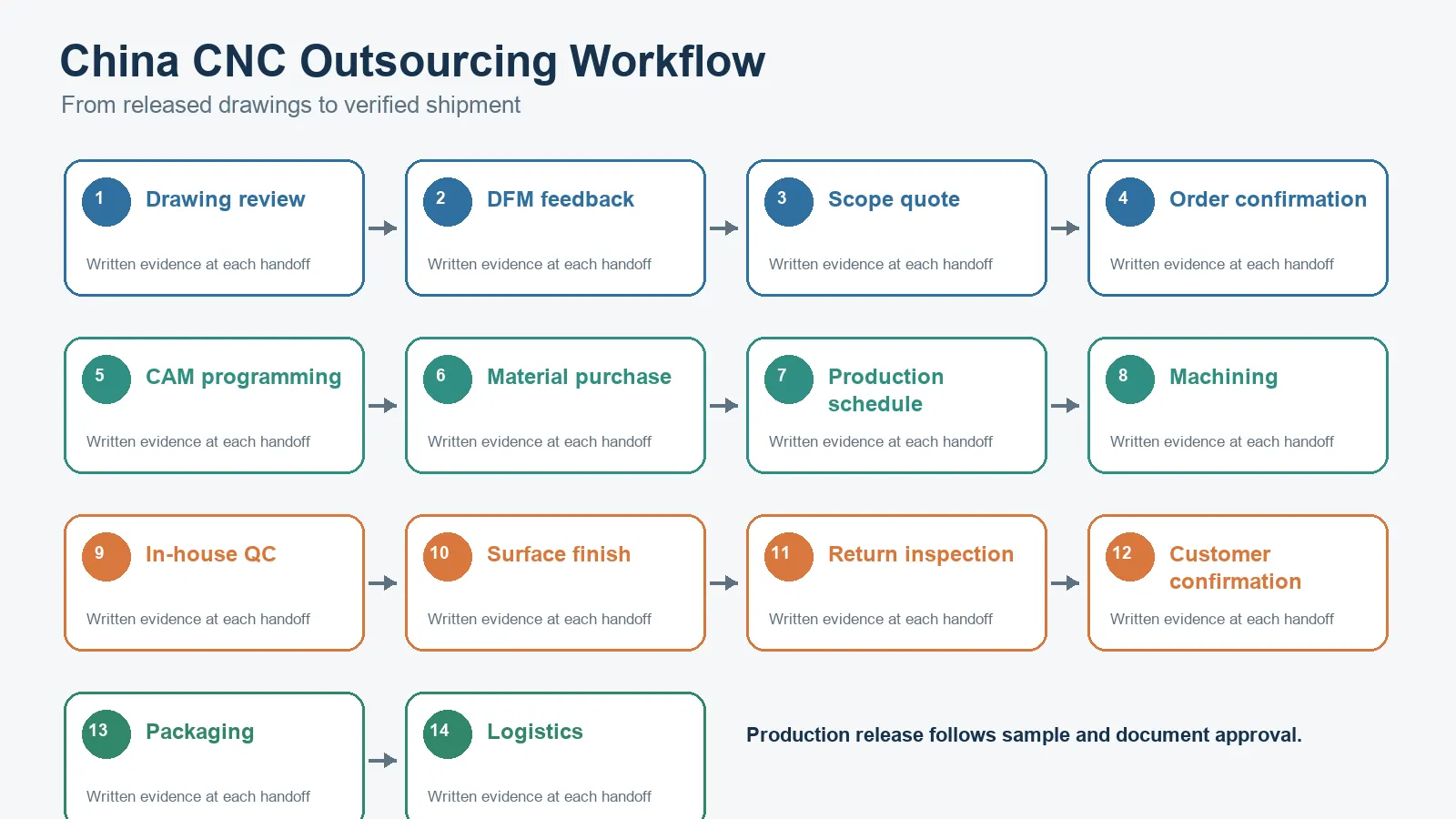
The process we run, in order:
- Drawing review (STEP + 2D)
- DFM feedback — what is achievable, what to loosen
- Quote with scope breakdown, not just a unit price
- Order confirmation, including revision level
- CAM programming
- Material procurement
- Production scheduling
- Machining (milling, turning, Swiss, wire EDM as specified)
- In-house QC
- External surface treatment (anodizing, plating, passivation)
- Return inspection at our shop
- Photos and records confirmed with you
- Packaging per your spec
- Logistics per the agreed Incoterm
- Delivery confirmation
First-order spare material. On a one-piece first order we normally buy two pieces of raw material, sized to project risk — the second piece exists to absorb a machining issue or a late-found drawing question. For high-cost or scarce materials, the decision is made per project, with the quantity and cost on the table before you approve.
Nonconformance. If a part fails inspection, it is remade from the spare material, re-inspected, and re-photographed before shipping. You see the failure, the remake, and the verification — not just a new tracking number.
Moving to mass production. Before the batch runs we confirm, in writing: revision level, documents, batch quantity, tooling status, production scheduling, and delivery terms. Nothing is assumed from the sample stage.
Incoterms, Logistics, and Packaging
- Incoterms and payment terms are set per project — EXW, FOB, CIF, and DAP all work, but agree on one at the quote stage, because the Incoterm decides who owns freight, insurance, export clearance, and import clearance.
- Packaging and labeling follow your requirements — export cartons, wooden cases, barcode labels, handling marks.
- Rust prevention: steel parts may ship with rust-preventive oil on machined surfaces unless you specify otherwise. Say “no oil” if you want dry parts, or name the oil type.
- Lead time has no fixed number; it depends on material availability, part complexity, quantity, finishing, inspection, and freight mode. Ask for a project schedule. For repeat orders, see the CNC batch production lead time guide.
When a Chinese Factory Beats a Marketplace — and When It Does Not
A direct Chinese CNC factory is usually a better fit when the project needs engineering review, revision control, CTQ inspection, first-article approval, material documentation, or coordinated surface finishing. A marketplace may be faster for simple prototype parts with standard tolerances and no special documentation.
Use JXD when the drawing has functional tolerances, material traceability, surface finish control, repeat-order planning, or a need for written engineering communication. Use an instant-quote platform when the part is simple, the tolerance is standard, the material is common, and speed matters more than engineering discussion.
When China CNC Machining Is Not the Best Fit
Be honest about these before sending an RFQ:
- The design is still changing weekly — local iteration beats a long-loop rework cycle.
- The part carries ITAR or export-controlled content.
- Your customer mandates a regional audit you cannot perform remotely, or the regulated application (medical implant, automotive safety) needs a quality-system scope you have not verified.
- The part is low value and heavy — sea freight plus duty can consume the entire price gap.
- The part must be co-located with assembly that stays at home.
- It is a single critical component with no spare-material mechanism and no inspection step. One rejection stops your line.
In these cases, a local shop — even at a higher unit price — is the lower-risk decision.
Buyer Checklist
- STEP + 2D with GD&T and a revision block
- Material grade + spec
- Surface finish callout
- Quantity + annual volume
- CTQ list with datums
- Inspection documents required (FAI, CMM results, or your template)
- Incoterm + destination
- RoHS / REACH requirements stated
- MTR / CoC needs stated
- Spare-material decision agreed for the first order
- Sample + inspection approval before production
- Written confirmation of schedule, revision, and scope
Use the first CNC order from China checklist to convert these requirements into a reusable PO template.
FAQ
Is CNC machining in China cheaper than local machining?
Often on the part price, but only a scope-matched comparison is trustworthy. Compare quotes line by line — material grade, surface finish, inspection documents, packaging — then add freight, customs duties (verify the HTS classification for your destination and confirm with your customs broker), and payment fees. A low unit price with a vague scope is not a landed cost.
What tolerances can a Chinese CNC factory hold?
It depends on the geometry, material, and machine. Send the STEP file and the 2D drawing with the tolerances you actually need, and the DFM review will state what is achievable and economical. FAI and CMM reports verify the measured results. Tightening non-functional dimensions beyond the design need only raises cost and scrap risk.
How long does a CNC machining order from China take?
There is no fixed number. Lead time depends on material availability, part complexity, quantity, surface finishing, inspection requirements, and the freight mode you choose. Ask for a project schedule with the DFM, sample confirmation, production, and delivery steps broken out.
What quality documents will I receive with my order?
FAI and CMM reports are available when specified in the RFQ and quotation. Material test reports, certificates of conformity, and RoHS/REACH declarations are available on request — some documents carry a charge, so confirm what is included in the quote. If you have your own inspection template, we will fill it in for you.
Send the Drawings, Not the Questions
The fastest way to test a China CNC supplier is to send the STEP file and the 2D PDF. JXD reviews the geometry, drawing revision, material, finish, CTQ features, quantity, documents, and delivery requirements before quoting. JXD operates 100+ machining machines across CNC milling, turning, Swiss-type machining, and wire EDM, and coordinates secondary processes with return inspection. Review the CNC machining service overview and start with the drawings.
 English
  German
  Italian
  Russian
  Spanish
  Turkish
  French
  Portuguese