he supplier is audited, the DFM feedback is in, and the quote is accepted. The first purchase order you send to a China CNC shop is not a test of price. It is a test of the process chain that will deliver every order after it: drawing interpretation, material procurement, machining, inspection, and paperwork.
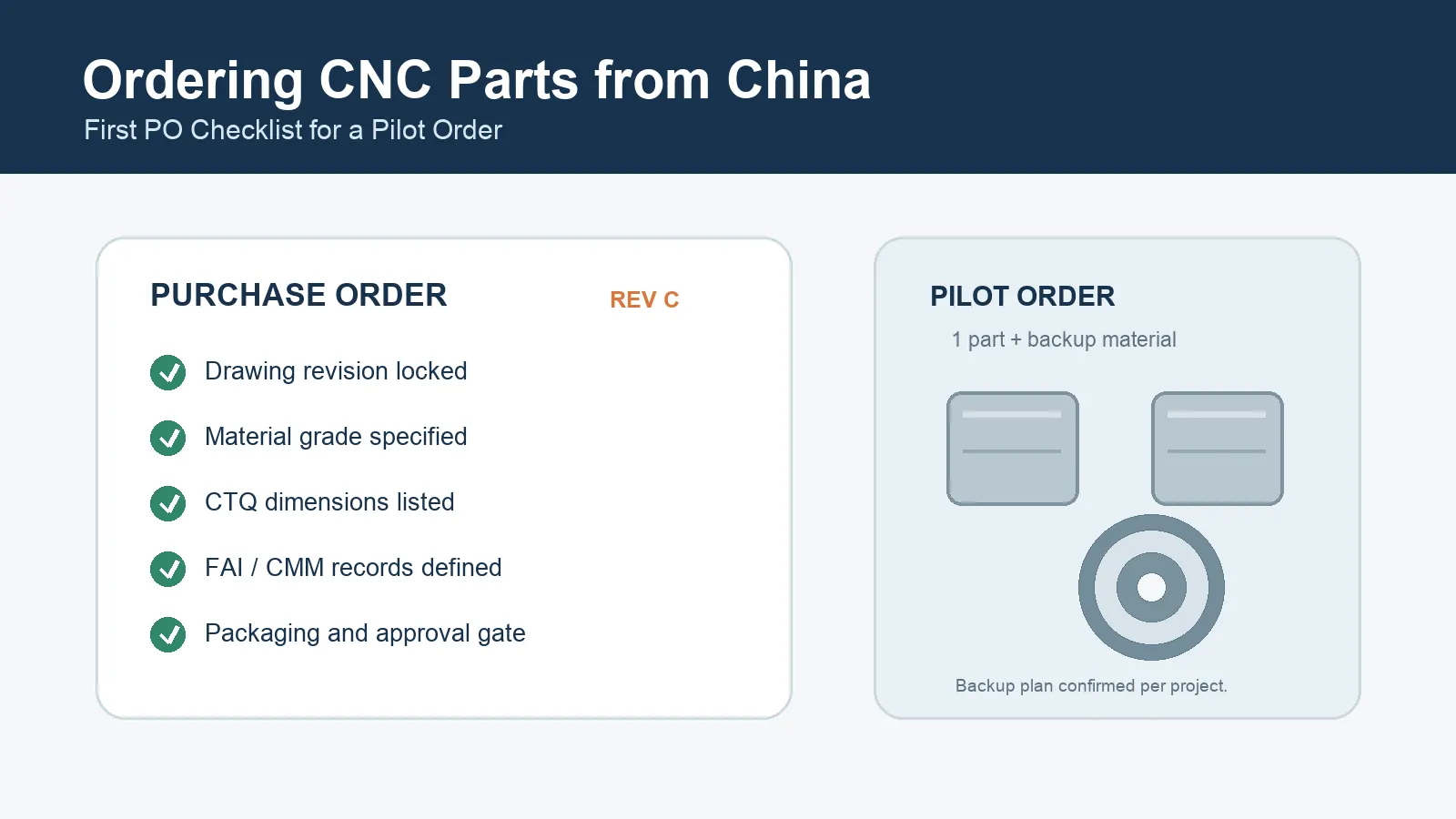
For a one-piece pilot order, JXD normally prepares two raw-material blanks when material availability and project economics allow. If the first piece fails first-article inspection, the spare lets the team restart without opening a new material-purchasing cycle. High-cost or scarce materials require a project-specific backup plan rather than an automatic 2:1 rule.
This checklist covers what to write into that first PO, what documents should come back with the part, what happens when the first piece is non-conforming, and how to gate the move from pilot to a production batch. It assumes you have already chosen the supplier. If you are still shortlisting factories, start with the China CNC machining outsourcing guide instead—and if the factory has not been audited yet, run the supplier audit checklist before you issue this PO, not after.
What a Pilot Order Actually Tests
A pilot order tests five things, in order: whether the shop reads your drawing the way you intend, whether the material grade arrives as specified, whether the process holds the critical dimensions, whether the inspection report proves it, and whether the paperwork survives customs. It does not test price.
If you chose the supplier on per-part price alone, the pilot order is where that decision surfaces. A non-conforming first article can erase the quoted saving through rework, new inspection, and delayed assembly. The pilot order is also the least expensive stage for finding drawing errors: a wrong revision or a missing tolerance affects the trial quantity rather than a production batch.
One piece is a process test, not a product purchase—treat the first-article report as the test result and the part as evidence.
What to Write Into the PO: The Checklist
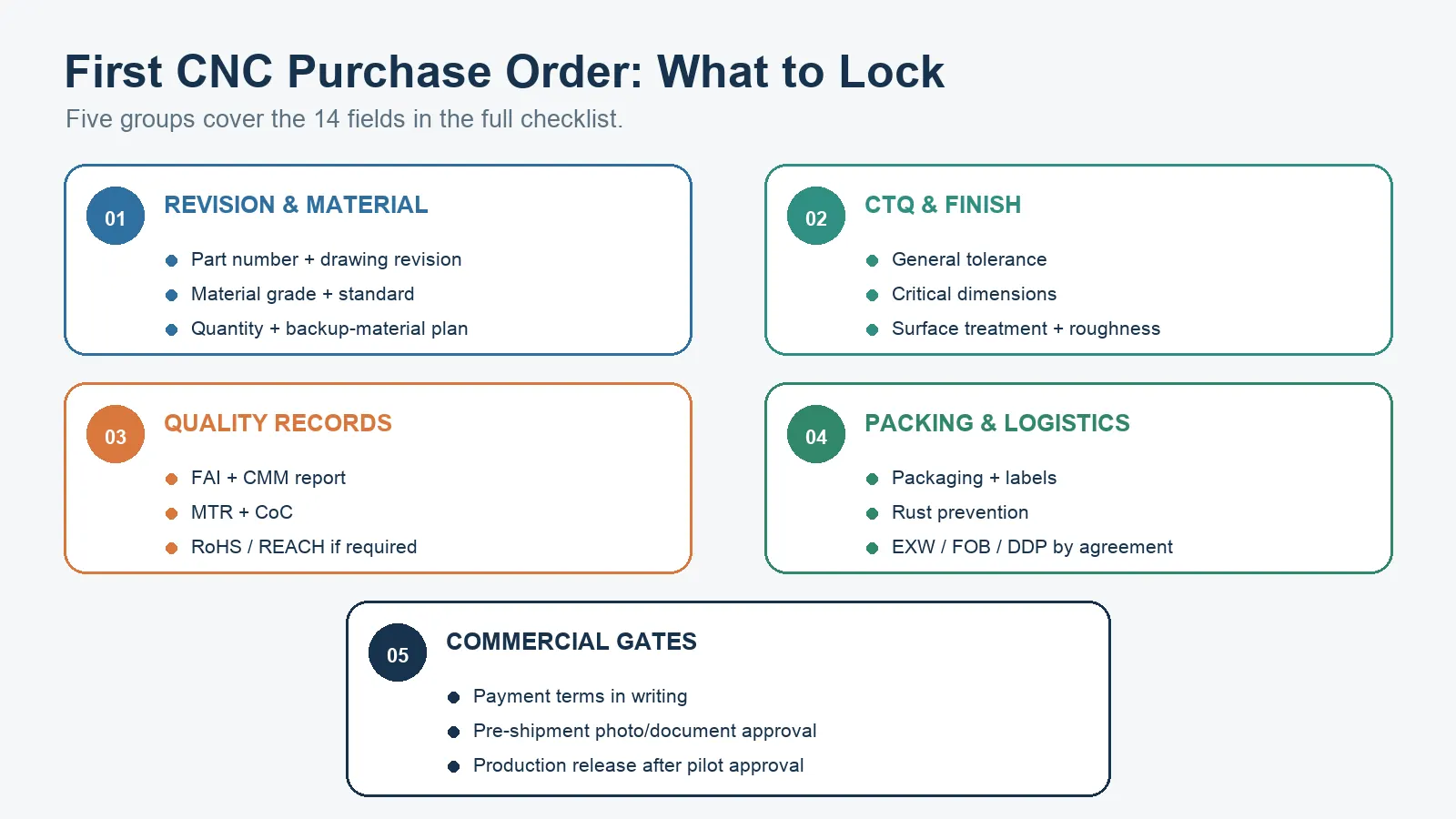
Every line below is copyable. Fill in the blanks, paste it into your PO, and both sides are working from the same document. The goal is not legal protection—it is that the factory, the inspector, and your QC all verify against the same revision, grade, and tolerance.
| # | PO line | What to write | Why it matters |
|---|---|---|---|
| 1 | Part number & drawing revision | “P/N ABC-1023, drawing Rev C” | The PO must match the released CAD and 2D drawing. |
| 2 | Material grade | “6061-T6 per ASTM B221” / “316L” / “Ti-6Al-4V” | Material substitution requires written approval. |
| 3 | Quantity & spare material | “Qty 1 delivered; backup blank subject to material availability and quote” | For suitable one-piece pilots, JXD normally prepares 2 blanks. High-cost or scarce stock is confirmed separately. |
| 4 | General tolerance | “ISO 2768-m unless overridden on drawing” | Defines the default requirement for uncalled dimensions. |
| 5 | Critical dimensions | List 3–8 CTQ features, e.g. “Ø12.00 ±0.05 mm, 25.40 ±0.10 mm” | These are the FAI measurement priorities. |
| 6 | Surface treatment | “Type II anodizing, 5–25 µm, natural” or “none—as machined” | Locks finish scope before production. |
| 7 | Surface roughness | “Ra 0.8 µm on sealing faces; rest as machined” | Identifies functional surfaces. |
| 8 | Inspection documents | “FAI + CMM report + MTR + CoC; RoHS/REACH if required” | Some document types carry an extra fee; confirm at quotation. |
| 9 | Inspection template | “Supplier to fill customer’s inspection template” | JXD supports customer report formats. |
| 10 | Packaging & labeling | Label content, box count, pallet rules | Matches warehouse and customs requirements. |
| 11 | Rust prevention | Method matched to material and transport; steel may use rust-preventive oil | Controls corrosion risk in transit. |
| 12 | Incoterms & destination | EXW, FOB, CIF or DDP—as agreed | Defines freight responsibility and risk transfer. |
| 13 | Payment terms | “Confirmed in quotation and PO for this project” | JXD agrees payment terms per project. |
| 14 | Approval gate & milestones | Photos and documents confirmed before shipment; milestones in writing | Prevents shipment before technical acceptance. |
If a tolerance is not critical to assembly or function, leave it at the general tolerance—tighter callouts on non-functional surfaces raise price and scrap risk without adding value. Every number above is an example, not a promise: replace it with your drawing values, material and finish.
What Happens After You Send the PO
Knowing the factory’s internal flow lets you ask the right question at the right time. This is the sequence JXD runs for a pilot order:
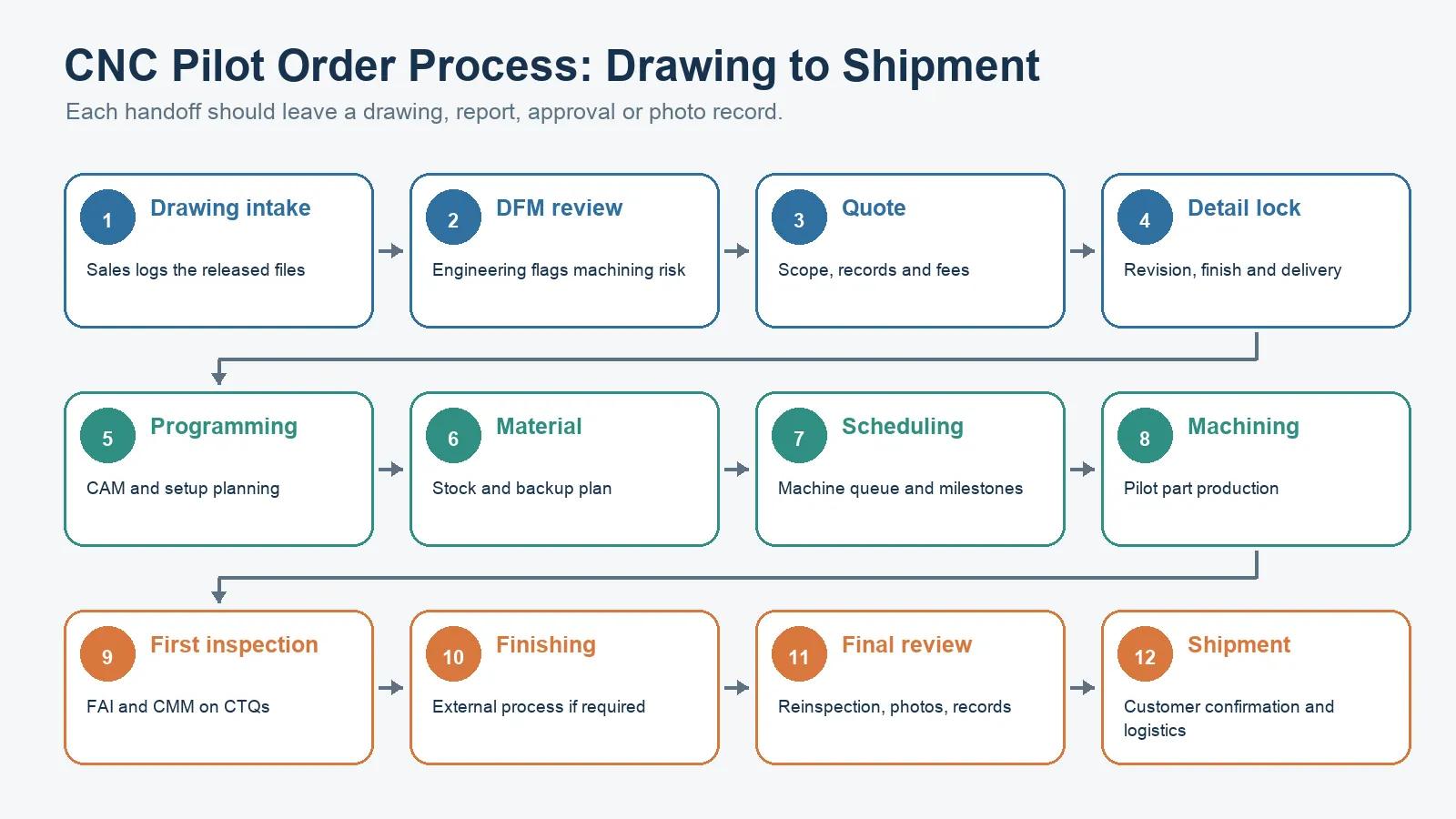
- Sales receives the released drawing and logs the project.
- Engineering evaluates the part and provides DFM feedback.
- Sales quotes price, project lead time and document fees.
- Both sides confirm revision, material, finish, packaging, Incoterms and payment terms.
- Engineering creates the CAM program and setup plan.
- Purchasing secures stock and confirms the backup-material plan.
- The job enters production scheduling with agreed milestones.
- The pilot part is machined.
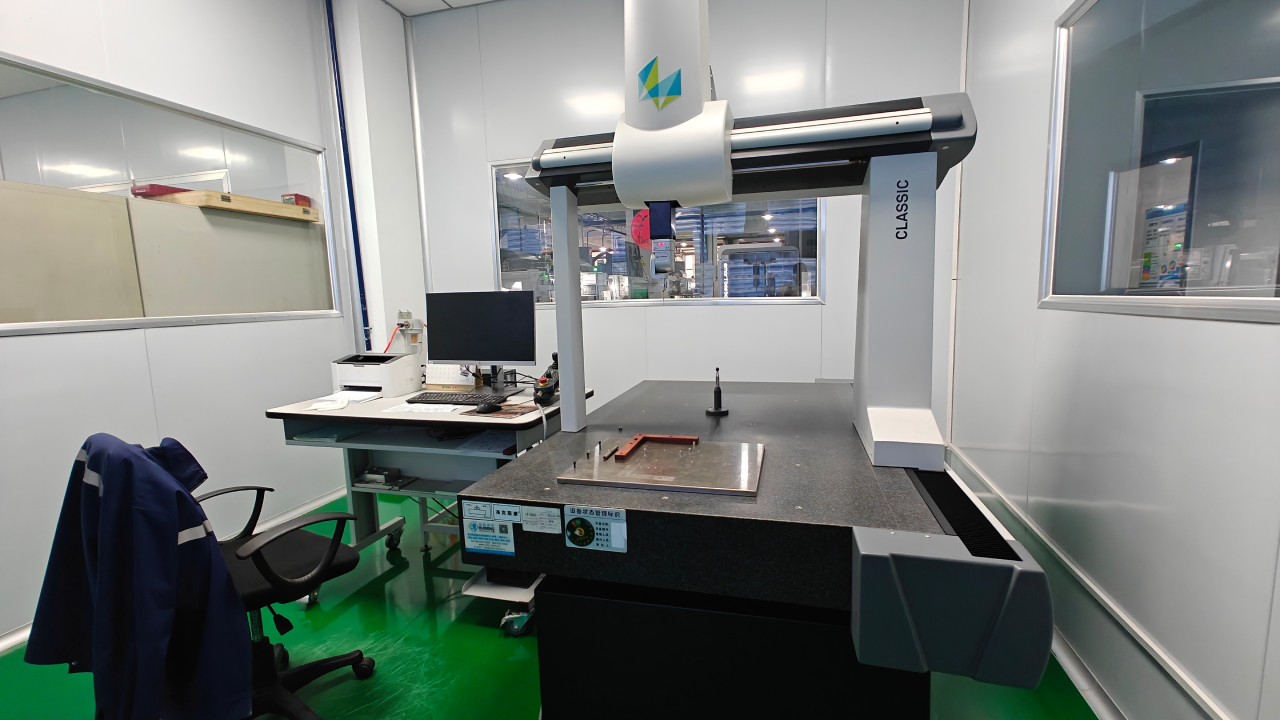
- First-piece inspection checks CTQ features with the agreed methods, including CMM where required.
- Surface treatment is completed externally if specified.
- The returned part is re-inspected; photos and records are prepared.
- After customer confirmation, logistics arranges shipment under the agreed Incoterms.
Each step should leave a document, approval or photo. If a shop cannot show the first-inspection result or the post-finish reinspection when asked, that absence is part of the pilot result.
Documents That Should Come Back With the Part
- FAI report—measured values against the released drawing and CTQ list.
- CMM report—coordinate measurement results where geometry and datum relationships require it.
- MTR—material evidence for the ordered grade.
- CoC—the supplier’s signed conformity statement.
- RoHS / REACH declarations—when required; confirm availability and fees in the quote.
JXD can provide FAI and CMM records and can complete customer inspection-report templates. MTR, CoC, RoHS and REACH documents are available by requirement; some document packages add cost and must be included in the quotation.
A supplier that cannot document one part will not reliably document a thousand. If the report lacks actual values, drawing revision or CTQ identification, request correction before scaling.
When the First Piece Fails
Non-conformance is exactly what the pilot is designed to expose. The agreed response should be:
- Share the failed measurement and photo rather than hiding the result.
- Identify whether the cause is programming, tooling, setup, finishing or drawing ambiguity.
- Use the approved backup material to remake the part where available.
- Repeat the same inspection and customer-confirmation gate before shipment.
Do not accept only a verbal explanation. Ask for the failed data and the corrective action.
From Pilot to Production: The Release Gate
A passing pilot does not automatically authorize production. Confirm these six items in writing:
- Pilot part and documents accepted.
- Correct drawing revision released.
- Batch inspection scope agreed.
- Quantity and lot structure confirmed.
- Fixture, tooling or mold requirements approved.
- Material, machining, finishing and shipment milestones documented.
Do not release production until the revised drawing, inspection scope, batch quantity, tooling requirement and delivery milestones are approved in writing. For schedule planning, see the guide to CNC batch production lead time.
FAQ
Do I need a formal PO for a one-piece pilot order?
Yes. A one-page PO with the part number, drawing revision, material grade, tolerance callouts, and approval gate costs nothing and eliminates the two most common disputes: which revision was machined, and which material was used.
What inspection documents should I request with a pilot order?
Request a first article inspection (FAI) report with CMM data on the critical dimensions, a mill test report (MTR) for the material grade, a certificate of conformance (CoC), and RoHS/REACH declarations if needed. Confirm which documents carry extra fees before placing the order.
What happens if the first article fails inspection?
The shop redoes the part from the spare blank prepared at material procurement, then runs the same first-piece inspection and the same customer confirmation before shipment. You should receive the failed measurements and the corrective action in writing.
How do I move from pilot to a production batch?
Confirm pilot acceptance, incorporate drawing corrections into a new revision, agree on quality documents and batch quantity, decide whether tooling or fixtures are needed, and put scheduling and delivery milestones in writing before issuing the production PO.
Send the STEP File and Draft PO
Send the STEP file and draft PO through our CNC machining service page. JXD will confirm the drawing revision, flag DFM risks, identify document fees and define project milestones before production starts. See the STEP file guide for engineers for the file package we review.
 Turkish
  English
  German
  Italian
  Russian
  Spanish
  French
  Portuguese