Let’s rip the band-aid off immediately. You vetted a new supplier and approved the “golden sample.” It was flawless, passing every dimensional check with flying colors. But when the 5,000-piece mass production run hit your receiving dock, 30% of the components failed your incoming inspection.
What exactly happened? In the real world of subtractive manufacturing, tool wear accelerates, thermal expansion shifts datums, and undocumented setup changes completely destroy geometric tolerances. And that framed ISO 9001 certificate the supplier proudly emailed you during the quoting phase? In the hands of a mere middleman or an unverified trading company, it is nothing more than a wall decoration.
Over my 20 years managing global supply chains for the US aerospace and automotive sectors, I have seen every trick in the book. Securing a reliable CNC supplier China can offer is entirely possible and highly profitable, but you must know how to separate the heavy-asset physical factories from the smooth-talking brokers.
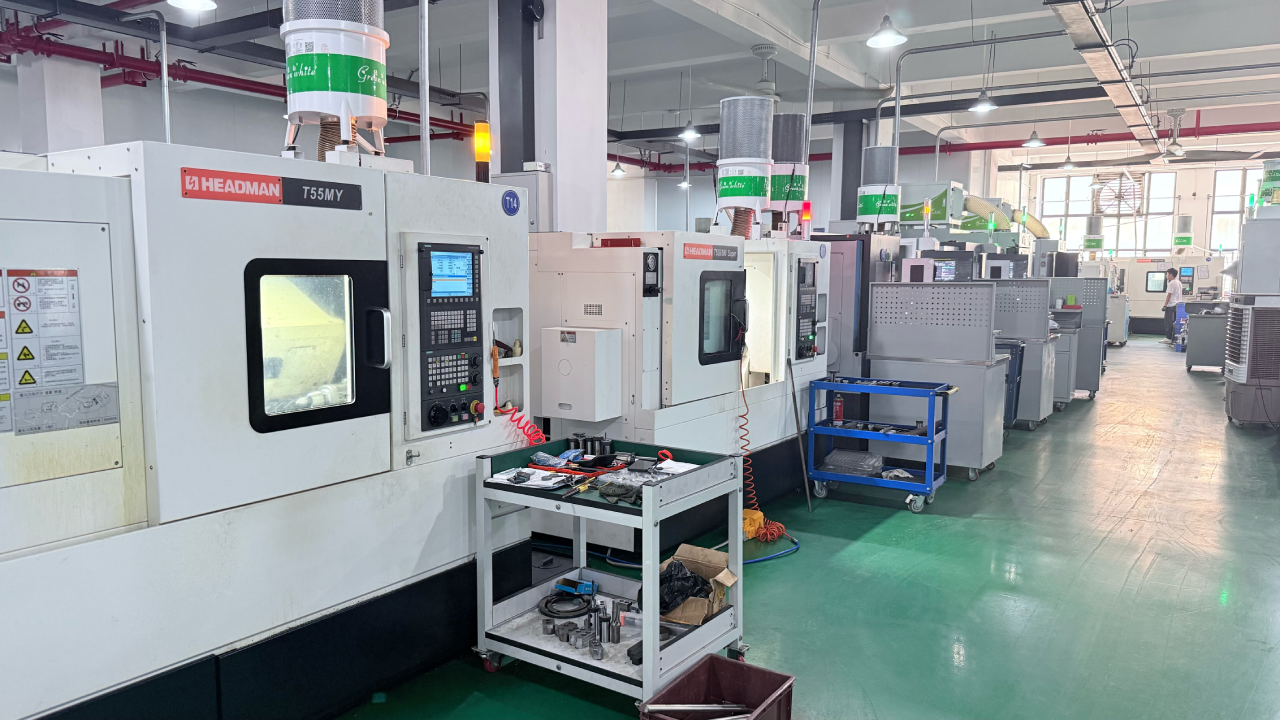
At JXD Machining, we have spent 15 years building a heavy-asset, temperature-controlled manufacturing floor designed specifically for Western engineering demands. I am going to show you exactly how to audit China CNC machine shop capabilities, bulletproof your supply chain, and avoid costly mass production failures before you issue a massive purchase order.
Why ISO 9001 Alone Is Not Enough for Your Critical Components
For Western supply chain directors sourcing precision machined components offshore, the most expensive mistake is not the quoted piece price—it is the hidden cost of inconsistent quality.
ISO 9001 only outlines a basic quality management framework, but it does not mandate the industry-specific rigor required for mission-critical aerospace brackets, automotive transmission components, or tight-tolerance precision parts. Relying solely on this generic certificate is no longer sufficient risk mitigation. A true Tier-1 CNC partner must demonstrate robust pre-production quality engineering, advanced metrology capabilities, a zero-defect culture, and full compliance with aerospace and automotive-specific standards like IATF 16949 and AS9102.
Hardcore Technical Questions to Expose Brokers in Your First Email
If you want to weed out middlemen and low-tier workshops immediately, do not ask them if they have “good quality.” Ask them these four technical questions. A broker will dodge them or provide vague assurances; a real, capable factory will answer with verifiable, hard data.
1. “Can you provide a redacted AS9102 First Article Inspection (FAI) report from a recent complex aerospace or automotive project?”
If they manufacture critical aerospace or automotive components, a basic dimensional Excel spreadsheet is entirely insufficient. You need to see their First Article Inspection CNC discipline.
The aerospace standard AS9102 Rev C requires comprehensive, ballooned mapping of every single dimension, raw material certification, and special process validation across Forms 1, 2, and 3. A robust FAI must include:
- Fully ballooned 2D drawings with every dimension, note, and GD&T tolerance individually numbered
- Clear actual vs. nominal data, with exact measured values against print tolerances
- Full material and finish certifications with end-to-end traceability
If they cannot produce a real AS9102 FAIR, their metrology department lacks the rigor required for your tight-tolerance work.
2. “What is your standard Gage R&R protocol, and how do you maintain CPK > 1.33 across full production runs?”
Brokers will panic at this question. A golden prototype only proves they can make one good part. To prevent a mass-production disaster, a shop must maintain a Process Capability Index (CPK) of > 1.33 across the entire batch, which guarantees consistent quality at scale.
Furthermore, you need to understand their Gage R&R (Repeatability and Reproducibility) methodology. If their measurement variation is too high, their inspection data is fundamentally flawed and useless for validating part compliance.
3. “How do you manage tool life and offset compensation during unattended runs, and what pre-production risk assessments do you complete?”
The leading cause of dimensional drift in mass production is unmanaged tool wear. You need to know if they rely on legacy end-of-line manual inspections, or if they utilize in-process automated probing and AI-assisted compensation loops to adjust for tool wear in real-time.
Beyond in-process controls, advanced Tier-1 factories engineer quality into the process before the spindle even turns. At JXD Machining, before we initiate programming for any of our 60+ CNC machines, our engineering team conducts a thorough Design for Manufacturability (DFM) review, paired with Advanced Product Quality Planning (APQP) and Failure Mode and Effects Analysis (FMEA). We proactively identify high-risk geometric tolerances (such as deep-hole total runout or thin-wall chatter) and establish specific in-process controls to mitigate them, rather than sorting out defects after machining.
4. “Explain your end-to-end material traceability process from raw billet to finished part.”
Hitting a basic surface roughness Ra of 0.8 µm is relatively easy for modern equipment. However, guaranteeing the exact alloy melt chemistry and maintaining strict traceability across a 10,000-part run is incredibly difficult.
You must ask exactly how they tie material test reports (MTRs) to the physical batches on the shop floor, how they track batch numbers through every production step, and how they retain documentation for full lifecycle traceability— a non-negotiable requirement for both aerospace and automotive supply chains.
Standard Workshop vs. JXD Tier-1 Heavy Asset Factory: Full Capability Comparison
Here is the brutal truth of offshore procurement: your supply chain’s integrity relies entirely on your partner having actual skin in the game. Below is a full, auditable comparison between a standard middleman/broker workshop and the Tier-1 infrastructure we operate at JXD Machining.
| Quality Control Dimension | Standard Middleman / Low-Tier Workshop | JXD Machining (15-Year Heavy Asset Tier-1 Factory) |
|---|---|---|
| Equipment Ownership | Rents time on aging 3-axis mills; outsources complex 5-axis geometries | Owns 60+ high-end CNC machines, including advanced 5-axis machining centers for complex aerospace and automotive parts |
| Pre-Production Quality Engineering | No formal risk assessment; starts machining immediately after sample approval | Full APQP, FMEA, and DFM review for every project, with strict Production Part Approval Process (PPAP) for automotive clients |
| Metrology & Inspection | Relies on hand calipers and micrometers; outsources complex CMM verification | In-house climate-controlled metrology lab with Hexagon Coordinate Measuring Machines (CMM), Vision Measuring Systems (VMS), digital surface roughness testers, and full hardness testing capabilities |
| Quality Management System | Generic ISO 9001 (often unverified, outdated, or treated as a formality) | Strict, verifiable adherence to IATF 16949:2016 (Automotive) and ISO 9001 standards, with processes aligned to AS9100 aerospace requirements |
| FAI & Production Stability | Basic Excel spreadsheets; high variance in mass production runs | Full AS9102 First Article Inspection reports; real-time Statistical Process Control (SPC), digital traceability, and automated tool compensation |
| Material Traceability | Basic mill certs with no batch-level tracking | Full end-to-end traceability, with MTRs tied to every production batch and retained for full component lifecycle |
The Non-Negotiable Standards That Dictate Your Bottom Line
IATF 16949: Defect Prevention, Not Just Defect Detection
While ISO 9001 is reactive, IATF 16949:2016 is the rigorous, automotive-specific standard developed by the International Automotive Task Force, designed to prevent defects before they occur. It mandates systematic variation reduction, strict change management, and continuous improvement in the supply chain—requirements that directly eliminate the “golden sample, failing production” risk.
At JXD Machining, our IATF 16949 certification is not just a badge for automotive clients; we apply these stringent process controls across all industries we serve, including aerospace. This means your production runs are governed by real-time SPC and strict change management. If a tool wears down or a setup changes, the system flags it before a non-conforming part reaches the shipping dock.
Advanced Metrology: You Cannot Control What You Cannot Measure
The integrity of your parts is only as good as the inspection equipment used to verify them. Manual gauges introduce unacceptable operator variance for components requiring ±0.005mm tolerances, which is standard for aerospace and automotive parts.
A climate-controlled metrology lab with automated Hexagon CMMs proves a factory is absolutely serious about verifying true position, cylindricity, and complex surface profiles that manual tools simply cannot touch. Paired with VMS for non-contact measurement of fragile micro-features and digital surface roughness testers for quantifiable finish verification, this infrastructure is non-negotiable for critical component manufacturing.
Stop Guessing. Start Verifying. Secure Your Supply Chain Today
Your supply chain’s integrity should never rely on blind faith or a lucky prototype run. Scaling production safely requires hard data, heavy-asset manufacturing capability, and a relentless, unapologetic commitment to quality control. We built JXD Machining over the last 15 years precisely to eliminate the risks Western procurement teams face when sourcing offshore.
Stop rolling the dice with middlemen who lack the equipment, expertise, and certified processes to guarantee your tolerances. Send your drawings, 3D CAD files, and a mutually binding NDA to JXD Machining today. We will return a comprehensive trial order quote, fully backed by our commitment to deliver verifiable Hexagon CMM data, full AS9102 FAI documentation, and IATF 16949-compliant production controls.
 Russian
  English
  German
  Italian
  Spanish
  Turkish
  French
  Portuguese