
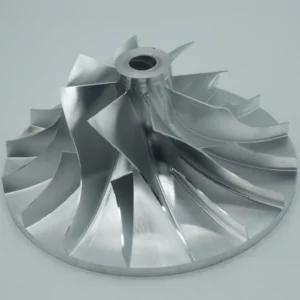
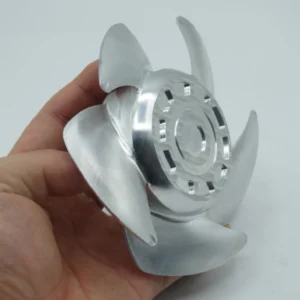
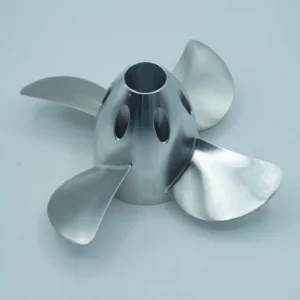
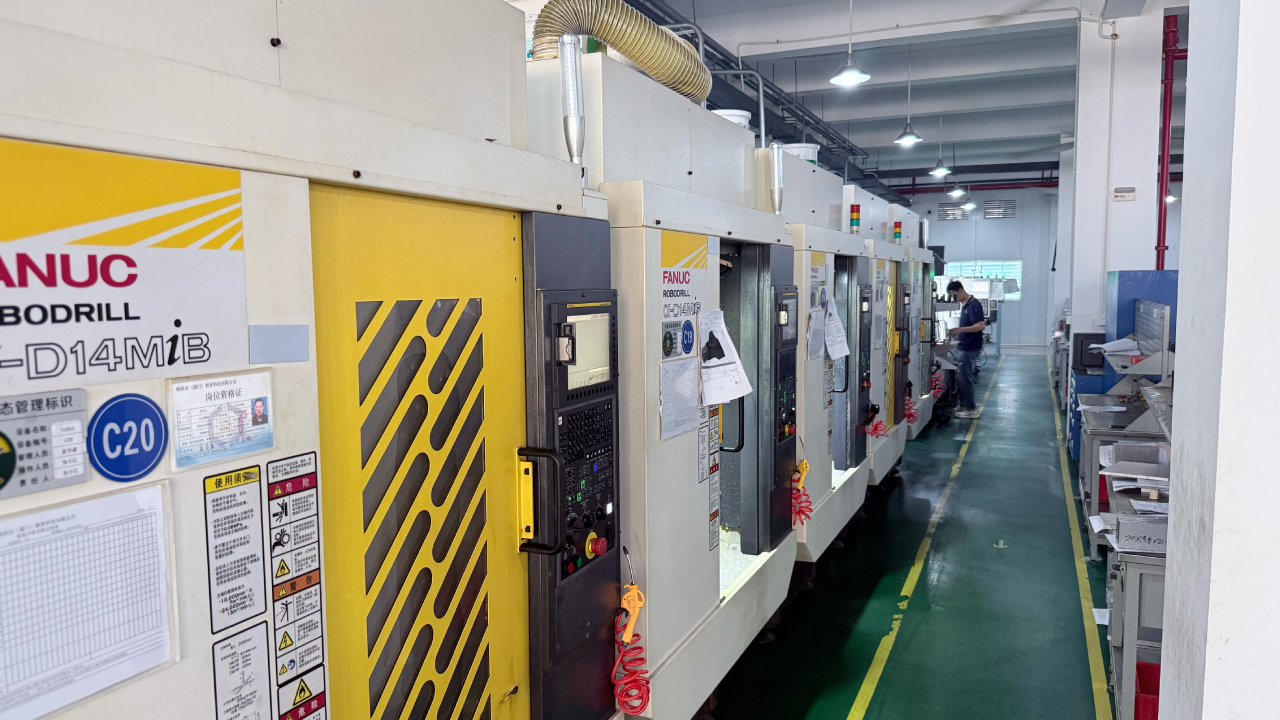
In the 2026 precision manufacturing procurement paradigm, supply chain agility is a core metric for enterprise survival. The traditional custom CNC machining procurement process—characterized by scattered manual estimates, lengthy email threads, and opaque pricing models—has largely been rendered obsolete by standardized, digital rapid quoting workflows. For procurement managers and mechanical engineers, acquiring an accurate, instant CNC quote has evolved from an operational convenience into a baseline business necessity. This in-depth guide uses JXD Machining’s operational flow as a core case study to completely deconstruct the underlying logic and practical steps of modern, highly efficient CNC quoting systems.
Macroeconomic Pressures and the Inevitability of Instant Quoting
The transition toward standardized rapid quoting is not merely a natural evolution of technology; it is driven by severe macroeconomic pressures and inherent inefficiencies within traditional manufacturing supply chains.
Supply Chain Volatility and the Hidden Costs of Manual Estimation
Between 2025 and 2026, global manufacturing faced ongoing turbulence, driven primarily by fluctuating trade policies, tariff barriers, and sharply rising raw material costs. With material prices and input costs surging, relying on static Excel spreadsheets and fragmented manual cost estimations has proven disastrously inefficient. Industry surveys reveal that a vast majority of US manufacturers have lost significant business deals due to slow quoting generation or excessive manual intervention. This quoting inefficiency causes mid-sized manufacturing firms to leak crucial revenue annually—stemming from miscalculated machine run times, uncaptured setup costs, and delayed responses to potential buyers.
Skilled Labor Shortages and the Systematization of Tribal Knowledge
Traditional manual quoting relies heavily on the “tribal knowledge” of senior sales engineers and machinists, who use their experience to judge cycle times, optimal tool paths, and historically successful machining strategies. However, as experienced manufacturing personnel retire, organizations relying on this individual knowledge face a severe decline in quoting speed and accuracy.
JXD Machining effectively mitigates this labor deficit by systematizing and standardizing this tribal knowledge into internal quoting databases. We have built a robust quoting system based on over 50,000 historical machining projects, institutionalizing decades of machining experience into a 24/7 accessible digital process. This continuously refines our understanding of Time on Machine (TOM) and material removal rates, ensuring consistent, accurate quotes that no longer rely on a single employee’s intuition.
Shortening Time-to-Market and Optimizing Budget Planning
The primary strategic advantage of an instant CNC quoting system is the drastic compression of product development timelines. In 2026, product lifecycles are shorter than ever, demanding extreme supply chain agility for high-mix, low-volume production.
Utilizing JXD Machining’s standardized rapid quoting system, engineers can receive a detailed price breakdown—including material costs, machining time, surface finishing fees, and estimated lead times—in under 3 minutes. This 24/7 instant response capability allows engineering teams to evaluate multiple design iterations simultaneously. By comparing the cost impact of different materials or tolerances in real-time, teams can optimize product designs for Design for Manufacturability (DFM) before issuing purchase orders, avoiding late-stage budget overruns.
Core Architecture of an Exceptional Instant CNC Quoting System
The accuracy of an instant quote depends entirely on the standardization and data depth of its underlying computational architecture. Early online quoting tools were essentially simple volume calculators based on rough bounding boxes. By 2026, these have been replaced by standardized geometric feature analysis and real-time cost accounting systems driven by massive historical data.
Standardized Geometric Feature Analysis and Actual Machining Time Prediction
The core mechanism of a modern quoting engine lies in its ability to accurately predict Time on Machine (TOM). Traditional manual estimation often guesses cycle times based on vague memories of similar past jobs or generic CAM simulations, ignoring variations in machine rigidity, spindle horsepower, tool life, chip evacuation, and workholding constraints.
In contrast, JXD Machining’s standardized quoting system utilizes a proprietary geometric feature analysis framework. Combined with our historical database, it authentically analyzes specific features of 3D CAD models, such as deep cavities, thin walls, undercuts, and intersecting holes. The system evaluates the required volumetric removal rates and automatically maps the job to the most appropriate machine type on the floor. By factoring in specific machine kinematics and tool change times, it generates highly precise cycle time estimates reflecting real-world manufacturing costs.
Dynamic Material Pricing and Cost Allocation
An accurate quoting system must dynamically synthesize variable cost inputs. The base cost of CNC machining is heavily influenced by the machine type and the “machinability” of the selected material. Our standardized cost accounting system carefully breaks down average hourly rates based on real-time market and historical data:
| Machine Type | Average Hourly Rate (USD) | Geometric Complexity Level | Typische Anwendungen |
| CNC Turning (Lathe) | $30 – $55 | Low – High | Axles, pins, high-precision cylindrical parts |
| 3-Axis CNC Milling | $35 – $60 | Low – Medium | Simple enclosures, flat plates, basic brackets |
| 4-Axis CNC Milling | $60 – $90 | Medium – High | Complex engine mounts, manifolds, polyhedrons |
| 5-Axis Continuous Milling | $100 – $150 | Ultra High | Aerospace impellers, complex medical implants |
Table 1: Benchmark hourly rate comparison for CNC machining processes in the 2026 manufacturing market.
Furthermore, the system continuously updates raw material market fluctuations and machinability indexes. For instance, Aluminum 6061-T6 has excellent machinability, allowing high feed rates, whereas specialty materials like Titanium Grade 5 or Inconel cause rapid tool wear, requiring significantly reduced cutting speeds. The quoting algorithm automatically adjusts projected tooling consumption costs and run times based on the specific material grade selected.
Engineer-Led Instant DFM Feedback
A key feature of cutting-edge quoting platforms is the integration of instant Design for Manufacturability (DFM) feedback. When JXD Machining engineers receive an uploaded CAD file, the system concurrently flags geometric features that are physically impossible or prohibitively expensive to machine (e.g., perfectly sharp internal corners requiring tiny end mills or EDM, extremely deep/narrow pockets, or inaccessible undercuts).
By automatically highlighting these manufacturing bottlenecks during the quoting phase, we provide clients the opportunity to modify designs before production begins. This prevents costly tooling surprises, reduces scrap rates, and ensures the final machined components meet all tolerance requirements without expensive mid-process engineering revisions.
Full Process Breakdown: Standardized Steps to Acquire an Instant CNC Quote
The workflow deployed by JXD Machining perfectly embodies the 2026 industry standard: converting raw digital designs into actionable manufacturing contracts in 3 minutes.
Uploading CAD Files and Geometric Parsing
The quoting process begins with uploading the component’s digital model. The file format fundamentally impacts the accuracy of the geometric analysis. While we support STEP, IGES, STL, DXF, DWG, and PDF, Non-Uniform Rational B-Spline (NURBS)-based formats—specifically STEP (.stp) und IGES (.igs)—are the absolute preferred choices for maximum quoting precision.
NURBS formats contain mathematically precise definitions of solids, edges, and surfaces, allowing the algorithm to rapidly calculate optimal tool paths and volume removal. Conversely, mesh formats like STL (common in 3D printing) represent surfaces through approximate triangles, obscuring critical dimensional data needed for high-precision subtractive manufacturing.
Selecting Material Specifications and Adjusting Quantities
Following data ingestion, the user defines the material grade and production batch size. JXD Machining’s supply chain infrastructure supports over 100 metals and plastics, including Aluminum 6061-T6, 304 Stainless Steel, 1018 Carbon Steel, ABS, and POM (Delrin).
Users must specify exact tempers and grades (e.g., “Aluminum 6061-T6” instead of just “Aluminum”), as structural variations dictate raw material costs and allowable cutting speeds. Adjusting the quantity immediately triggers algorithmic adjustments to the unit price. In CNC machining, initial setup—including CAM programming, custom fixture manufacturing, edge finding, and tool loading—represents a massive fixed cost. As quantities increase, these setup costs are amortized over a larger batch, drastically lowering the unit price.
Setting Surface Finish Requirements and Dimensional Tolerances
Tolerances and surface finishes introduce exponential variables to the cost algorithm. JXD Machining offers over 20 surface finish options, including As-Machined, anodizing, powder coating, and precision plating. Surface roughness is evaluated according to international standards like ASME B46.1 and ISO 1302.
Requesting an extremely smooth surface (e.g., Ra < 16 µin) means the machine must utilize dedicated finishing tools with multiple micro-passes, exponentially increasing machining time. Similarly, tolerance parameters dictate the stringency of the process. While standard CNC tolerances are around ±0.1mm (ISO 2768-1), high-precision equipment can hold tolerances to an extreme ±0.005mm. However, enforcing tighter tolerances fundamentally alters manufacturing costs:
| Tolerance Level | Tolerance (inch) | Tolerance (mm) | Relative Cost Multiplier | Manufacturing Impact |
| Standard | ±0.030″ | ±0.76mm | 1.0x | Standard machining process |
| Standard Precision | ±0.010″ | ±0.25mm | 1.1x | Additional finishing pass required |
| Hohe Präzision | ±0.005″ | ±0.13mm | 1.5x | Dedicated tooling and custom fixturing |
| Tight | ±0.002″ | ±0.05mm | 2.5x | Climate-controlled shop, high-precision machines |
| Critical | ±0.001″ | ±0.025mm | 4.0x | 100% CMM inspection and manual calibration |
Table 2: The exponential impact of tightening dimensional tolerances on manufacturing costs in precision CNC machining.
The core principle of cost-effective DFM is to specify tight tolerances only on critical mating surfaces, allowing non-critical dimensions to default to standard tolerances.
Adding Secondary Operations and Delivery Lead Times
The penultimate step involves defining special secondary operations outside standard milling or turning. This includes heat treatments (e.g., quenching, annealing), specific thread tapping, multi-component assembly, or custom anti-static packaging.
During this phase, users also select their preferred production speed. The system evaluates the feasibility of standard lead times (typically 7-10 days) versus expedited lead times (3-5 days), adjusting pricing to reflect scheduling disruptions, overtime operator wages, and premium expedited freight costs.
Generating the Instant Quote and Lifecycle Integration
Once all parameters are entered, the quoting algorithm generates a precise, finalized quote in under three minutes. This is not a vague estimate, but a highly granular, transparent document breaking down material costs, run time fees, setup charges, finish surcharges, and logistics.
Users receive one-click ordering options and the ability to save and share the quote with cross-functional engineering teams, eliminating the historical friction of transitioning from prototype approval to full-scale production.
The Complete CNC RFQ Checklist for Absolute Quote Accuracy
The precision of a rapid quote is fundamentally constrained by the quality of data provided by the user. “Garbage in, garbage out” applies heavily here. To ensure pricing reflects true production costs without downstream renegotiations, engineering teams must adhere to a strict RFQ checklist:
-
3D CAD Model (NURBS Preferred): STEP or IGES formats provide the precise geometric boundaries necessary for toolpath and volume analysis.
-
2D Engineering Drawings with GD&T: Missing 2D drawings is a critical error. Drawings must clearly indicate Geometric Dimensioning and Tolerancing (GD&T) per ASME Y14.5, defining datums, concentricity, flatness, and specific feature tolerances.
-
Precise Material Grade and Condition: Specify the exact alloy and temper (e.g., “Aluminum 6061-T6”) to calculate yield strength and machinability.
-
Order Quantity and EAU (Estimated Annual Usage): Providing both allows manufacturers to optimize tooling investments and propose long-term supply agreements.
-
Surface Roughness Requirements: Clearly state the required Roughness Average (Ra). Use ISO 1302 symbols to mark surfaces needing polishing versus those left as-machined.
-
Secondary Operations: Explicitly state post-machining needs, such as heat treatment, chemical conversion (e.g., Alodine), Anodizing (Type II or Hardcoat Type III), or specialized plating (e.g., Electroless Nickel).
-
Thread Specifications and Gauging: Detail all threads (cut, rolled, or inserts like Helicoils) and specify if Go/No-Go thread gauging is required for QA.
-
Edge Breaking/Deburring: Define acceptable chamfer sizes or specific deburring instructions for safe handling and proper mating.
-
Compliance and Regulatory Standards: For defense, medical, or aerospace components, specify if Material Test Reports (MTRs) or compliance with RoHS, REACH, or DFARS are mandated.
-
Logistics and Delivery Destination: Provide the final delivery location and preferred Incoterms so algorithms can reflect accurate landed costs including freight.
Deconstructing Common Technical Myths About Instant CNC Quotes
Despite widespread adoption, misconceptions regarding standardized rapid quoting tools persist.
Myth: Rapid Quotes Always Lack Accuracy
The assumption that rapid quotes are just rough estimates is false. Systems based on massive real-world production data and expert engineering frameworks are statistically on par with—or more accurate than—fragmented manual estimates, frequently achieving over 95% pricing accuracy by removing human miscalculation and emotional pricing biases.
Myth: Rapid Quotes Only Apply to Simple Part Geometries
While early online calculators were limited to basic 3-axis profiles, 2026 technology features advanced geometric analysis capable of accurately detecting the need for 4-axis indexing, complex 5-axis continuous toolpaths, tricky undercuts, and chip evacuation challenges in deep pockets.
Myth: Instant Quoting Systems Cannot Provide Custom Options
Advanced platforms act as highly configurable parametric matrices. Users have granular control over production parameters—from specifying micron-level tolerances for a single bore to selecting highly specialized surface treatments and material certifications. The system recalibrates the price in seconds based on these specific inputs.
Myth: Rapid Quoting Platforms Are Always More Expensive
Many assume digital convenience comes with a premium surcharge. In reality, digitizing the quoting process slashes massive administrative overhead. Optimizations in machine scheduling and material yield reduce waste, and these operational savings are directly passed down to the client as lower, more competitive prices.
Standardized Processes Plus Senior Engineers: When Deep Human Intervention is Required
While powerful, standardized quoting systems are not omnipotent. JXD Machining employs a highly efficient hybrid model: using standardized processes for standard parts, while retaining a team of over 50 skilled manufacturing engineers and master machinists to handle edge cases.
Deep human intervention becomes an absolute necessity under these conditions:
-
Extreme Geometric Complexity: Parts requiring highly customized vibration-dampening strategies and bespoke soft jaws due to incredibly thin walls or high-frequency chatter risks.
-
Exotic and High-Risk Materials: Programming specific thermal management strategies for work-hardening superalloys, highly flammable metals (like certain Magnesium alloys), or newly developed composites.
-
Heavy DFM Restructuring: If a part is physically un-machinable as designed, human engineers must collaborate deeply with the client’s engineering team to redesign the component while preserving its functional intent.
-
Ultra-High Volume Production: For batches exceeding 10,000 units, pricing requires human procurement experts to negotiate bulk raw material rates directly with mills and design dedicated multi-station tombstone fixtures.
-
Custom Assembly and System-Level Validation: Projects requiring interference press-fits, multi-component assemblies, or specialized third-party Non-Destructive Testing (NDT) require manual lifecycle project management.
Even when human intervention is triggered, digital platforms ensure minimal delay, typically guaranteeing a comprehensive engineering response and finalized pricing within 24 hours.
Frequently Asked Questions (FAQ)
Q: Exactly how accurate are instant CNC quotes?
A: For standard part geometries, our standardized quoting system achieves over 95% accuracy. Built upon tens of thousands of historical production data points and expert engineering logic, it ensures estimated Time on Machine (TOM) and dynamic material costs reflect true shop-floor realities. Complex 5-axis components are automatically flagged for manual review, ensuring finalized, accurate pricing within 24 hours.
Q: What CAD file formats does the quoting system accept?
A: We support STEP, IGES, STL, DXF, DWG, and PDF. However, for maximum quoting precision, NURBS-based solid models—specifically STEP (.stp) and IGES (.igs)—are strongly recommended, as they provide the absolute exact geometric boundaries required for generating accurate toolpath simulations.
Q: How long does it take to generate a complete instant quote?
A: For standard geometries, a comprehensive price breakdown is generated in under 3 minutes. Exceptionally complex features or massive CAD files may take up to 10 minutes of processing time to finalize computations.
Q: Can the system generate tiered pricing for different production quantities?
A: Absolutely. The system dynamically calculates the amortization of fixed manufacturing setups (CAM programming, fixturing, etc.) across different batch sizes. Users can adjust quantity inputs in real-time to immediately observe economies of scale and optimize project budgets.
Q: Does the platform offer expedited production and logistics options?
A: Yes. While standard lead times are typically 7 to 10 days, users can select expedited parameters during quoting. The system will recalculate pricing to encompass shop-floor rescheduling, overtime, and expedited air freight, compressing the delivery window down to 3 to 5 days.
Abschluss
The shift from manual estimation to standardized, digital rapid quoting represents a fundamental evolution in precision manufacturing procurement. By integrating geometric feature analysis, dynamic material cost accounting, and instant DFM feedback, platforms like JXD Machining resolve the historical bottlenecks of manufacturing quoting. By delivering accurate, transparent pricing matrices in minutes, engineers and procurement directors are empowered to iterate designs faster, optimize batches, and drastically reduce their time-to-market.
 German
  English
  Italian
  Russian
  Spanish
  Turkish
  French
  Portuguese