
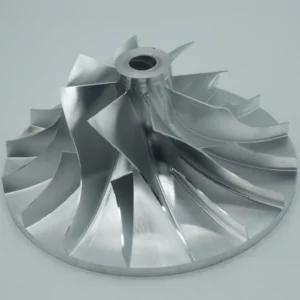
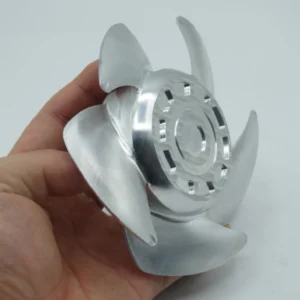
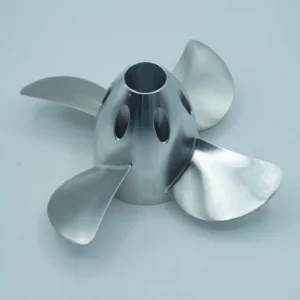
You are constantly balancing cost, lead time, and quality for your custom manufactured components. When you evaluate your supply chain, scaling production without sacrificing dimensional precision remains a massive daily hurdle. This is exactly where modern cnc machining china enters the conversation as a strategic, highly efficient operational lever.
Over our 10+ years of experience serving 1200+ Western engineering clients at JXD, we have seen exactly where cross-border manufacturing succeeds and where it fails. This guide covers everything you need to know before sending your STEP file to a Chinese CNC factory. We break down the realities of offshore production, from data-backed cost comparisons and strict file preparation to factory verification protocols. You will learn exactly how to mitigate risk and build a highly profitable, scalable global supply chain.
CNC Machining from China vs. Local Western Shops: Data-Backed Cost, Lead Time, and Quality Comparison
Let’s look at the hard numbers driving the China vs US CNC machining cost debate. 2026 Gardner Business Media data shows that ISO-certified Chinese CNC factories offer 30-50% lower part costs than US-based shops for identical specifications, with 40% faster average lead times. This structural advantage is not simply about lower hourly labor wages.
China’s cost efficiency stems from a hyper-localized supply chain, immediate access to raw material mills, and optimized engineering-to-operator ratios. Affordable engineering talent allows these factories to assign dedicated engineers to your projects, executing rigorous Design for Manufacturability (DFM) optimizations that drastically cut cycle times. Furthermore, top-tier Chinese CNC factories match Western quality standards by investing heavily in automated 5-axis equipment and strict in-line probing. They maintain rigorous ISO 9001 quality management systems that eliminate operator-dependent variation.
Consider a recent precision aluminum housing project we processed at JXD. A domestic US shop quoted the client $1280 per part with a 22-day lead time, hindered by external finishing vendor delays. We quoted the identical component at $590 per part with a 7-day lead time, utilizing the exact same Al 6061-T6 material and ±0.005mm tolerance requirements.
| Dimensions | ISO-Certified Chinese CNC Factories | US/EU Local CNC Shops | Production Flexibility |
| Coût |
30-50% lower part costs; $20-$35/hr typical 3-axis shop rate; lower NRE fees. |
Baseline premium; $80-$150/hr typical shop rate; high raw material sourcing costs. |
Rapid scaling from prototype to 10,000+ units via massive localized capacity. |
| Average Lead Time |
40% faster average turnaround; 24/7 lights-out manufacturing standard. |
Constrained by 1-2 shift models and acute programmer labor shortages. |
Highly agile; capable of shifting production schedules to accommodate rush orders. |
| Quality Compliance |
Strict adherence to ISO 9001/AS9100; robust in-process automated probing. |
Equal compliance; heavily reliant on legacy end-of-line manual inspection. |
Strong integration of digital metrology and real-time process adjustments. |
Critical Preparations Before Sending Your STEP File to a Chinese CNC Machining Partner
When figuring out how to send STEP files to Chinese CNC factory environments, your data package must leave absolutely zero room for interpretation. We’ve seen 32% of first-time client STEP files missing general tolerance notes, leading to 28% of parts out of spec during first article inspection. You must eliminate ambiguity before a single chip is cut.
Standardize Your STEP File for Universal Compatibility
You must strictly avoid sending native CAD files like SolidWorks (.SLDPRT) or Siemens NX (.PRT). Native formats require the receiving facility to utilize the exact same software year and version, introducing severe risks of feature tree corruption. Exporting a neutral STEP file isolates the pure boundary representation geometry.
However, you must intentionally select the correct STEP Application Protocol (AP). AP203 is a legacy format that strips away visual data, whereas AP214 supports color-coding and layer distribution. Exporting in AP214 allows you to apply specific colors to distinct surfaces, communicating tight-tolerance zones directly on the 3D model. Always utilize a clear file naming convention that includes the part number, revision letter, and date.
Complete Tolerance Specification Per ASME Y14.5 Standards
Translating dimensional requirements across international borders exposes fundamental conflicts between global drafting standards. North American engineering teams predominantly utilize the ASME Y14.5-2018 standard, which ties dimensional limits to maximum allowable form variation via the Envelope Principle. Asian and European facilities default to ISO 1101, which evaluates dimensional size and geometric form completely separately.
Your engineering drawing must explicitly state “DIMENSIONING AND TOLERANCING PER ASME Y14.5-2018” in the title block to prevent misinterpretation. Furthermore, you must define general tolerance notes for all non-critical dimensions. Calling out vague requirements like “tight tolerance” inevitably leads to unnecessary over-machining and inflated costs.
Explicit Surface Finish & Post-Processing Requirements
Surface finish requirements are frequently under-communicated in offshore data packages. A digital 3D model represents perfect, mathematically smooth surfaces that do not exist in the physical world. You must explicitly define the required Roughness Average (Ra) values for every machined face, such as Ra 3.2 µm for standard surfaces and Ra 0.8 µm for critical sealing zones.
Post-processing directives must be equally rigorous and specific. Calling out “Black Anodize” is insufficient; your drawing must specify the exact standard, such as MIL-A-8625 Type II or Type III. Heat treatment requirements must specify the target Rockwell hardness (e.g., HRC 45-50) rather than vague instructions to simply harden the part.
Full Material Specification & Compliance Requirements
Material ambiguity is a leading cause of functional failure in offshore manufacturing. Specifying generic “Aluminum” leaves the factory to select the cheapest available local alloy, which may lack your required yield strength. You must specify materials using internationally recognized standards, such as “Aluminum 6061-T6 per ASTM B209”.
You must also demand material test reports (MTRs) to verify the chemical melt and mechanical properties of the raw billet. Additionally, your data package must explicitly state requirements for RoHS and REACH compliance for EU/US markets. This ensures the overseas facility avoids utilizing alloys or coatings containing restricted heavy metals like lead or hexavalent chromium.
Include Assembly Context & Functional Requirements
The most sophisticated offshore manufacturing partners operate as collaborative engineering resources. However, they cannot optimize your component if they do not understand its end-use environment. Providing a simplified assembly model or functional description allows the factory to understand how the part interfaces with adjacent mechanisms.
This context helps the factory provide highly accurate DFM feedback. If a Chinese programmer knows a specific bore houses a high-speed bearing, they will proactively apply specialized boring strategies rather than standard circular interpolation. Providing operational context aligns the factory’s quality control priorities directly with your design requirements.
How to Verify a Reliable Chinese CNC Machining Factory: 4 Non-Negotiable Checks
Figuring out how to verify Chinese CNC manufacturer claims requires much more than checking their marketing website. You need verifiable, actionable methods to separate real factories from localized trading companies. Implement these four non-negotiable checks to secure your supply chain integrity.
Validate Official ISO 9001:2015 Certification & Quality Management System
ISO 9001:2015 certification serves as the baseline indicator of a facility’s commitment to standardized quality management. Simply accepting a PDF scan of a certificate is a severe procurement failure, as fraudulent documents are easily manipulated. You must verify the authenticity of the document through official regulatory channels.
Check the Certification Body (CB) listed on the document and verify the certificate directly on the official website of the Certification and Accreditation Administration of the People’s Republic of China (CNCA) at www.cnca.gov.cn. You can also verify the factory’s 18-digit Unified Social Credit Code on the National Enterprise Credit Information Publicity System (NECIPS) to confirm their legal business scope includes actual manufacturing.
Require a Formal First Article Inspection (FAI) Process
Prototype success does not guarantee mass production stability. To bridge the gap between initial validation and volume manufacturing, a formal First Article Inspection (FAI) process is strictly mandatory. The aerospace industry standard AS9102 Rev C represents the gold standard for FAI documentation and should be required for your complex components.
You must demand AS9102 forms 1, 2, and 3, which map every single dimension and tolerance from your “ballooned” drawing to an actual measured result. During your vetting phase, ask the facility to provide redacted FAI report samples from past projects. A reliable factory will readily supply these documents, proving their metrology department possesses the necessary discipline.
Confirm Legally Binding NDA & IP Protection Protocols
Intellectual property theft remains a primary concern for Western entities outsourcing manufacturing. A generic, English-only Non-Disclosure Agreement drafted under US or European jurisdiction offers virtually no practical protection in overseas markets.
Your NDA must be a bilingual document (English and Chinese), with the Chinese version explicitly stated as the controlling language. You must name a specific Chinese court for dispute resolution, which provides a faster mechanism for securing immediate cease-and-desist orders against rogue manufacturers. Furthermore, you must audit their digital IP protection measures, ensuring they utilize encrypted local file servers and enforce strict restricted access on shop floor terminals.
Audit Production Capabilities & Matching Case Studies
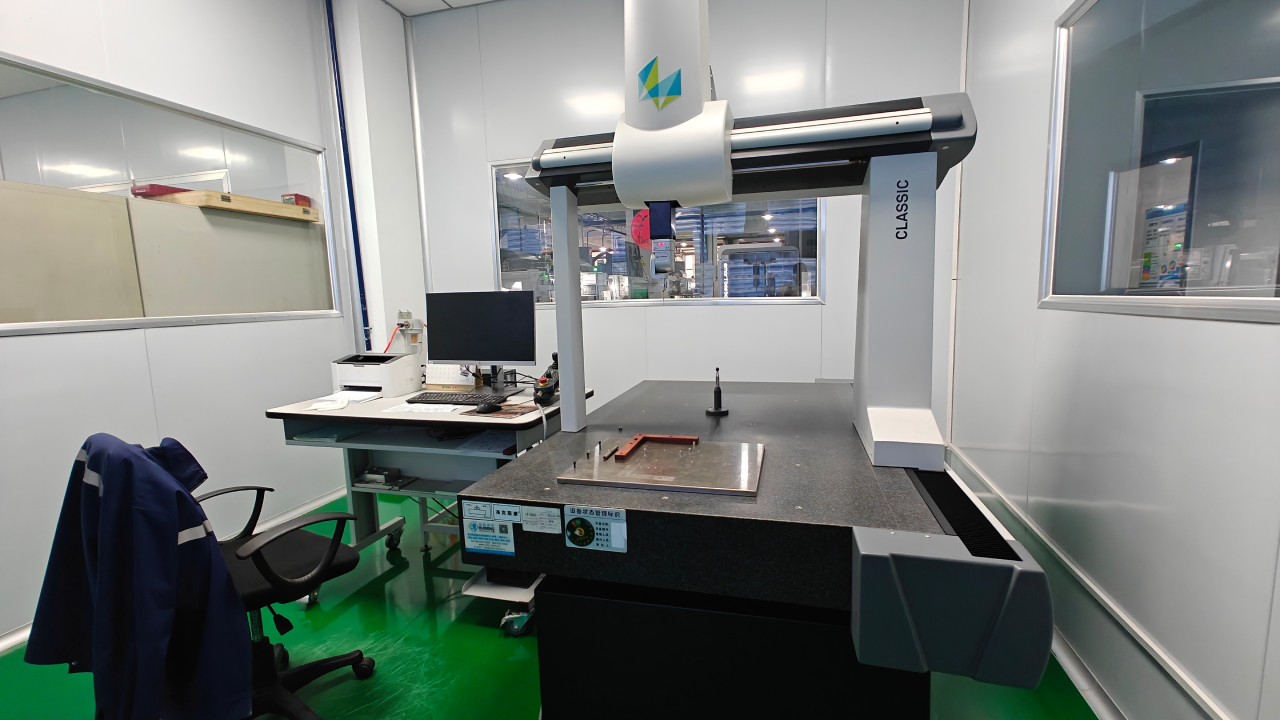
Physical distance complicates capability assessments, but modern video technology provides an adequate workaround. You must request a live video factory tour to inspect their specific 5-axis machining centers and climate-controlled CMM metrology labs.
A critical validation step is requesting matching case studies for your specific part type. If you are sourcing precision locating pins or tight-tolerance shafts, seeing a factory’s portfolio of simple enclosures is entirely insufficient. Reviewing client testimonials from other Western engineering firms provides secondary confirmation of the factory’s English communication skills and delivery reliability.
Our Streamlined CNC Machining Process for Western Engineers: No Surprises, On-Time Delivery
Is Chinese CNC machining reliable? It absolutely is when you implement a highly structured, data-driven workflow. At JXD, we have engineered an end-to-end process that completely eliminates communication barriers for our Western clients. We maintain a dedicated, English-speaking engineering team with 12+ hours of overlapping working hours with US and EU time zones.
Here is our exact 7-step process designed to eliminate surprises and ensure on-time delivery:
-
STEP file upload & 24-hour free DFM feedback for CNC machining: We analyze your geometry and provide actionable design tweaks to reduce your machining costs before you spend a dime.
-
Transparent, itemized quotation with no hidden costs: We clearly delineate raw material costs, machine hourly rates, and post-processing expenses so you can accurately calculate total landed costs.
-
Pre-production confirmation & NDA signing: We execute bilingual NDAs and lock in your exact ASME GD&T and material specifications.
-
Production & in-process inspection: Our Renishaw-equipped machines execute automated dimensional checks directly inside the machine envelope, compensating for tool wear in real-time.
-
FAI report submission before mass production: We generate comprehensive AS9102 FAI reports and submit the physical first article for your engineering approval.
-
Final inspection & on-time global shipping: We execute AQL statistical sampling and utilize hybrid logistics (express air or fast-sea) to deliver your parts on schedule.
-
Post-delivery engineering support: Our team remains actively engaged to assist with assembly feedback and rapid design iterations for your next batch.
Final Tips for a Successful CNC Machining Project with a Chinese Partner
Executing a flawless offshore manufacturing program requires strategic, defensive project management. You must implement specific tactical safeguards when initiating a relationship with a new manufacturing partner.
-
Start with a prototype trial order: Securing a CNC prototype from China is the smartest way to stress-test a new supplier. This evaluates their technical communication, DFM capabilities, and dimensional accuracy without exposing your enterprise to massive financial risk.
-
Define clear acceptance criteria upfront: Provide physical boundary samples showing acceptable versus unacceptable surface scratching or tool marks. This eliminates subjective arguments regarding cosmetic quality upon delivery.
-
Establish fixed communication channels: Move critical engineering decisions out of fragmented email chains and into centralized project management platforms. Schedule brief weekly video conferences with your factory’s English-speaking project manager.
-
Clarify payment terms and milestones: Tie your final payment releases to the successful review of final inspection reports, material certificates, and photographic evidence of the packaged components prior to shipment.
Conclusion
The dynamics of global manufacturing dictate that offshore production is no longer a race to the bottom for the cheapest labor. Reliable cnc machining from china offers a potent combination of advanced 5-axis technology, massive scalability, and highly competitive pricing structures for Western engineering teams.
Success in this arena is entirely dependent on meticulous preparation and stringent vetting. By standardizing your STEP files, strictly defining your GD&T standards, and executing rigorous factory verifications via CNCA databases and AS9102 FAI reports, you can completely neutralize the risks associated with offshore sourcing. When you choose the right partner and prepare your project correctly, cnc machining china delivers equal quality, lower costs, and significantly faster lead times.
Upload your STEP file — get free DFM feedback in 24 hours.
 French
  English
  German
  Italian
  Russian
  Spanish
  Turkish
  Portuguese