Swiss Machining für medizinische Mikroschrauben: Leitfaden für das Lieferantenaudit
Medical screw machining is a small-parts problem with zero tolerance for error. Eine medizinische Mikroschraube ist nicht deshalb schwierig, weil sie klein ist. Sie ist schwierig, weil das Gewinde, der Kopfantrieb, der Kerndurchmesser, der Gratustand und die Materialrückverfolgbarkeit auf einem Teil, das nur wenige Millimeter Durchmesser haben kann, kontrolliert bleiben müssen. Swiss CNC machining is usually the right process for long, small-diameter screws, pins, anchors, and medical turned components. The guide bushing supports the bar stock close to the cutting zone, so the material does not deflect like it would on a conventional lathe. For supplier selection, however, owning a Swiss-type lathe is only the starting point. You still need to audit threading method, burr control, material handling, inspection records, and how the supplier responds to your drawing. This guide is written for engineers and sourcing teams evaluating a Swiss CNC supplier for micro medical screws, orthopedic screws, dental screws, precision pins, and related small turned parts.
Wann Swiss Machining das richtige Verfahren ist
Swiss machining is strongest when the part has a small diameter, a high length-to-diameter ratio, and features that must stay concentric along the same axis. Medical screws often fit this pattern. A conventional CNC lathe holds the workpiece farther away from the cutting tool. When the screw blank is slender, cutting pressure can push the bar away from the tool. That creates taper, chatter, poor thread form, or unstable surface finish. A Swiss-type lathe feeds the bar through a guide bushing and cuts close to the support point. The unsupported length is short, so the blank behaves more like a rigid part. Swiss machining is a strong fit when your part has:
- Diameter below about 32 mm, especially below 10 mm
- Long, slender geometry where deflection matters
- External threads, self-tapping flutes, slots, or cross holes
- Tight concentricity between head, shank, thread, and tip
- High repeatability requirements across hundreds or thousands of pieces
- Materials such as titanium alloys, 316LVM stainless steel, MP35N, brass, or PEEK
It is not always the lowest-cost process for a simple short screw. If the part is large, short, and has only basic thread geometry, a conventional turning center may be enough. The audit question is not “Does the supplier own Swiss machines?” It is “Does the geometry actually need Swiss support, and can the supplier prove process control?” 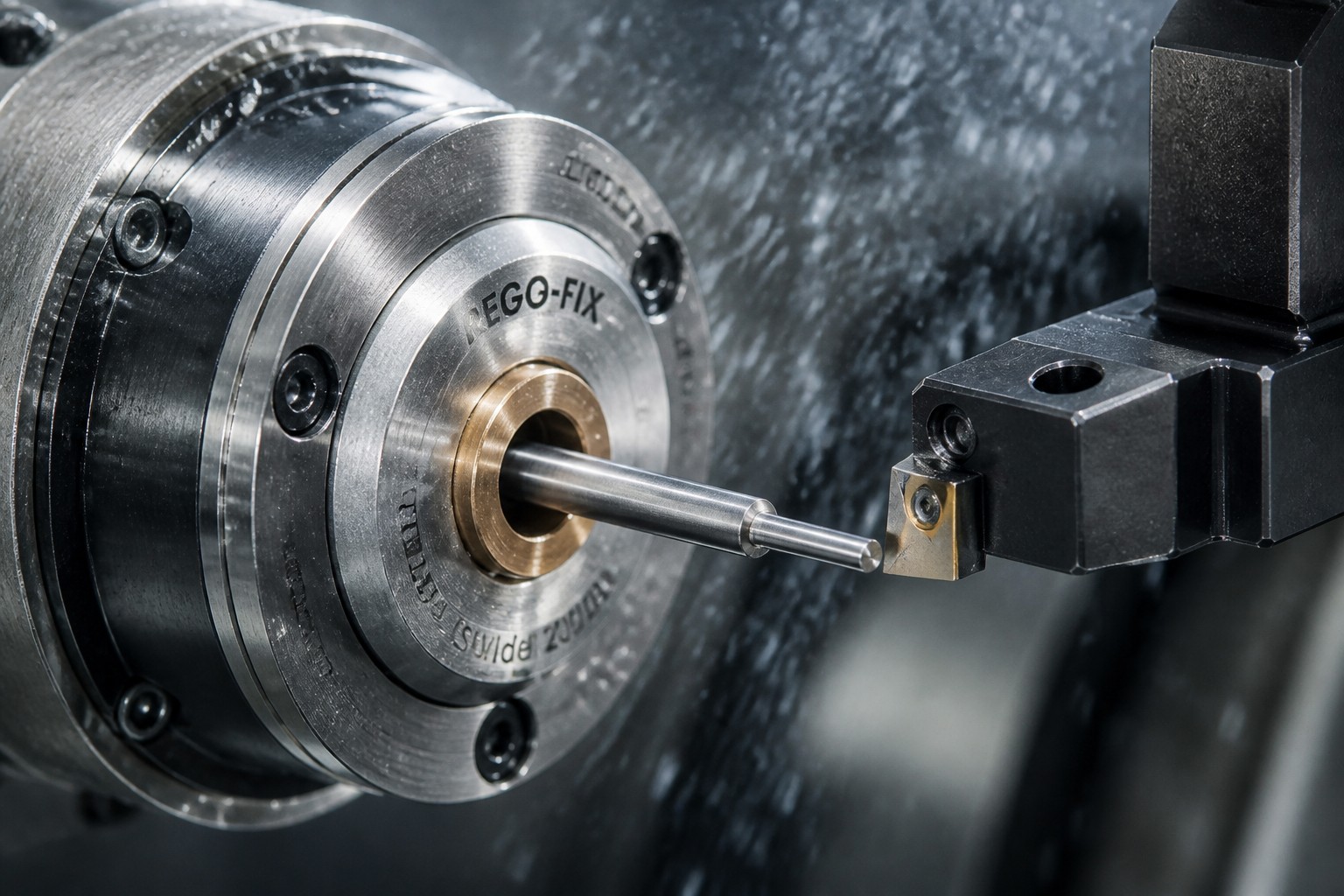
The Five Features That Make Medical Screws Hard to Machine
A buyer should not evaluate medical screw suppliers only by machine list. The screw features are what determine risk.
| Funktion | Why it matters | Supplier risk to audit |
|---|---|---|
| Major diameter | Controls thread outside size and fit | Tool wear can shift thread diameter over a batch |
| Minor diameter | Affects screw strength and pilot-hole fit | Overcutting weakens the screw core |
| Thread pitch | Controls insertion and holding behavior | Wrong pitch or pitch drift changes function |
| Head drive | Transfers torque during insertion | Poor broaching or milling causes cam-out |
| Tip/flute geometry | Supports self-tapping behavior | Burrs or dull edges increase insertion force |
| Surface finish | Affects contact, cleaning, and tissue interface | Tool marks, scratches, and burrs create rejection risk |
| Concentricity/runout | Keeps screw rotating true | Misalignment causes wobble during insertion |
For a supplier audit, ask the shop to explain which features they consider critical-to-quality. If the answer is only “we hold tight tolerance,” that is too vague. A competent Swiss shop should separate thread profile, concentricity, burr condition, surface finish, and inspection documentation.
Materials: What the Supplier Must Know Before Cutting
Medical screw machining is not only a shape problem. Material behavior changes cutting strategy.
| Material | Typical use | Machining concern | Supplier question |
|---|---|---|---|
| Ti-6Al-4V ELI | Orthopedic and implant-related parts | Heat buildup, tool wear, burrs | How do you control tool life and heat at the thread? |
| 316LVM stainless steel | Medical screws, pins, instruments | Work hardening and burr formation | What cutting data and deburring method do you use? |
| MP35N | High-strength medical components | High strength, difficult cutting | Do you have prior MP35N production records? |
| PEEK | Non-metal medical components | Plastic movement and stress | Do you anneal or stress-relieve before final sizing? |
| Messing | Test pins and connector-style micro parts | Plating and conductivity | How do you protect small features before plating? |
Do not approve a supplier only because they say they can machine titanium or stainless steel. For micro screws, the important question is whether they can keep the same thread form and burr condition across the full lot. For titanium medical screw work, ask for material traceability before production starts. The heat number on the material certificate should match the material issued to the job. If the part requires Ti-6Al-4V ELI, the supplier should not substitute general titanium bar stock because it is easier to buy. 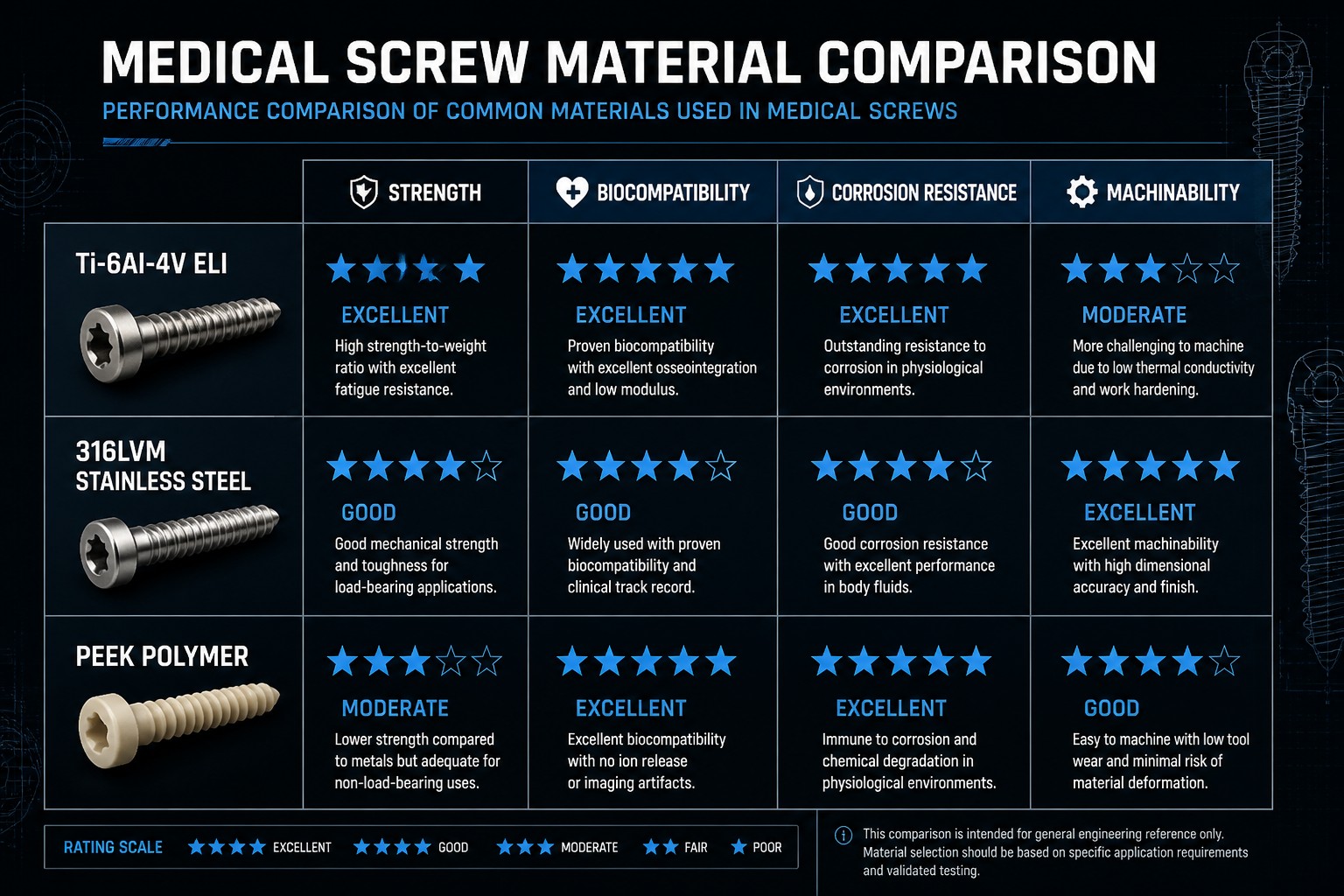
Supplier Audit Checklist: What to Ask Before RFQ Approval
Use the table below before moving a Swiss machining supplier from “quote source” to “qualified source.”
| Audit item | What to ask | Acceptable evidence |
|---|---|---|
| Swiss equipment | Which Swiss-type machines will run this job? | Machine model, bar capacity, guide bushing range |
| Similar parts | Have you made screws, pins, or shafts below 10 mm diameter? | Photos, redacted drawings, inspection examples |
| Thread method | Single-point threading, thread whirling, rolling, or die? | Process explanation matched to screw geometry |
| Burr control | How are thread crest, flute, and drive edges deburred? | Microscope photos or inspection criteria |
| Material traceability | Can you maintain heat-number traceability? | MTR, incoming inspection record, traveler |
| First Article Inspection | Can you provide FAI before batch release? | Ballooned drawing plus measured values |
| Critical dimensions | Which dimensions will be checked in process? | Control plan or inspection frequency |
| Surface finish | Can you measure Ra where required? | Surface roughness report if specified |
| Cleaning/handling | How are small parts protected after machining? | Packaging and contamination-control method |
| Revision control | How do you prevent machining the wrong drawing version? | ERP/MES record or controlled traveler |
For medical applications, documentation matters because a good sample is not enough. A supplier must show that the same process can repeat. Ask for the first article report, not only the final part photo. 
Inspection: What Should Be Measured
A micro screw cannot be fully qualified with calipers. Calipers may be enough for simple overall length checks, but they are not enough for thread profile, concentricity, small drive geometry, or burr condition. A practical inspection plan should include:
- Optical measurement for thread profile, pitch, major diameter, minor diameter, and tip shape.
- CMM or vision system inspection for head geometry, position, slot, or Torx-style drive features.
- Microscope inspection for burrs at thread starts, flute edges, cross holes, and drive pockets.
- Surface roughness testing where Ra is specified on the drawing.
- Material certificate review for titanium, stainless steel, MP35N, or other controlled materials.
- FAI report with nominal values, tolerances, and actual measured values.
The supplier should also know which dimensions need 100% inspection and which dimensions can use sampling. For a prototype lot of 10 pieces, full inspection may be reasonable. For production, the inspection plan should be tied to risk, not habit.
DFM Rules for Micro Medical Screws
A strong Swiss machining supplier should review the drawing before quoting. If the supplier only returns a price, you are missing the most valuable part of the RFQ process. Here are DFM points worth checking before release:
| Drawing feature | Risk | DFM recommendation |
|---|---|---|
| Very sharp internal corner in head drive | Tool radius cannot create a perfect sharp corner | Define acceptable corner radius |
| Deep small cross hole | Drill wander and burr breakout | Add burr requirement and inspection method |
| Long thread near shoulder | Tool clearance issue | Add relief groove if function allows |
| Tight tolerance on non-functional diameter | Higher cost without functional gain | Keep tight tolerance only on mating or load-bearing features |
| Unspecified surface finish | Supplier may choose default finish | Specify Ra only where function requires it |
| No burr standard | Disputes after shipment | Define “no visible burr under X magnification” if needed |
| Material grade written loosely | Substitution risk | Specify exact grade and certificate requirement |
For example, applying a very tight tolerance to the entire screw body may not improve function. If the critical features are the thread, head drive, and mating diameter, tighten those features and relax cosmetic or non-mating sections. This reduces cycle time, inspection load, and scrap risk. 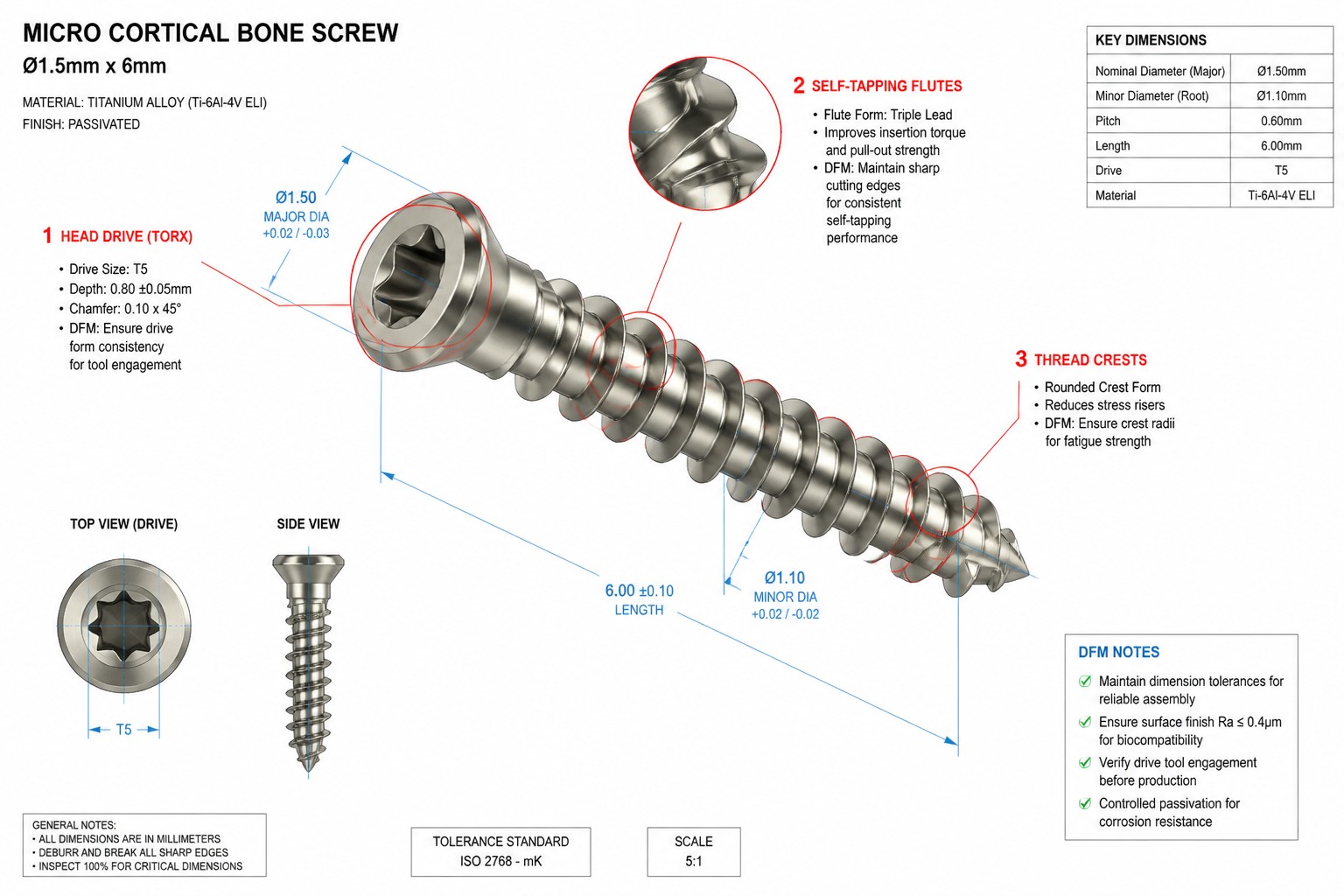
China Supplier Audit: What Overseas Buyers Should Verify
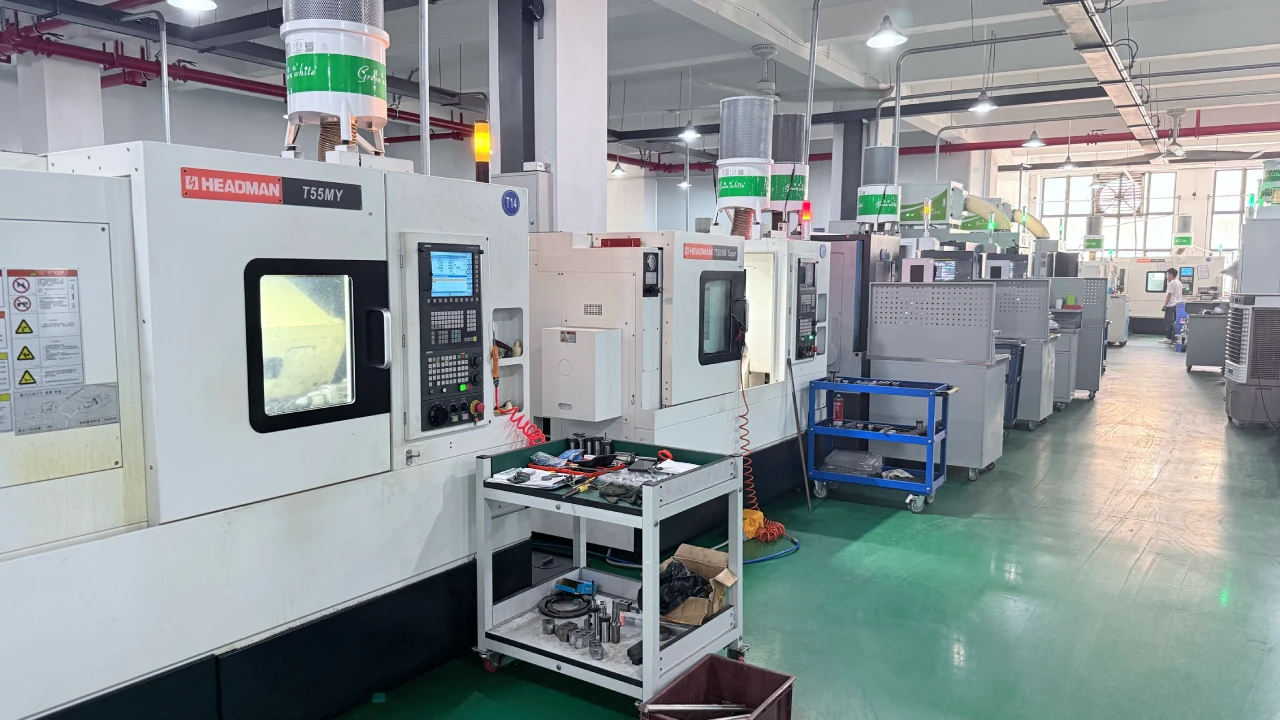
A China Swiss machining supplier can be a good fit for medical screw prototypes and production, but the buyer must separate real process capability from website claims. Before placing the order, verify four things. First, confirm that the supplier is not only a trading company. Ask for photos or video of the Swiss CNC machines, inspection area, and material storage. A serious shop should be able to show machine capability without exposing other customers’ drawings. Second, ask who reviews the drawing. For micro screws, the review should involve an engineer or process planner, not only a salesperson. The response should mention thread method, burr risk, material, inspection, and packaging. Third, check whether the supplier can support controlled documentation. For medical-related parts, even if the component is not a finished implant, buyers often need FAI, material certificates, dimensional reports, and revision control. Fourth, test communication speed and technical accuracy before the order. Send one drawing question: “Which features would you mark as critical-to-quality, and why?” A supplier that gives a clear answer before quoting is usually safer than one that only says “no problem.” JXD Machining operates over 90 machining machines and supports CNC milling, CNC turning, Swiss machining, EDM, materials machining, surface finishing, and inspection workflows. For small turned parts such as stainless steel micro pins, precision brass micro pins, gold plated precision testing pins, connector pins, probe pins, and medical-style precision components, the same audit logic applies: stable process first, price second.
RFQ Checklist for Micro Medical Screw Projects
Before sending the RFQ, prepare these items:
- 3D model in STEP or IGS format
- 2D drawing with all critical tolerances
- Material grade and certificate requirement
- Quantity for prototype, pilot run, and production
- Surface finish requirements such as Ra value
- Deburring requirement and inspection magnification if applicable
- Thread standard or custom thread profile details
- Required reports: FAI, dimensional report, material certificate, surface report
- Packaging requirement for small parts
- Target application: prototype, surgical instrument, dental component, orthopedic-related part, or non-implant test component
The more complete the RFQ package is, the more useful the supplier’s DFM feedback will be. If you only send a screenshot and ask for a price, you will receive a price, not a process plan.
Red Flags When Choosing a Swiss Machining Supplier
Reject or pause the supplier if you see these signs:
- They quote a micro screw without asking for a drawing or thread details.
- They claim any tolerance is possible but do not explain inspection method.
- They cannot describe burr control around threads or drive features.
- They cannot provide material traceability for controlled materials.
- They treat FAI as an optional document after production, not before batch release.
- They do not control drawing revision during quotation and production.
- They push the lowest unit price before discussing risk.
For micro medical screws, the cheapest quote often hides the expensive part of the job: scrap, rework, late inspection failure, or unusable documentation.
Abschluss
Swiss machining is the right process for many micro medical screws because the guide bushing controls deflection on small, slender parts. But the machine alone does not qualify the supplier. A qualified supplier should explain the thread process, material traceability, burr-control method, inspection plan, FAI format, and DFM risks before production starts. For engineers, the best supplier is not the one that says “we can make it.” It is the one that tells you where the screw can fail, how the process will control that risk, and which dimensions need evidence. If you are evaluating a micro screw, precision pin, or small medical turned component, send JXD Machining your STEP file and 2D drawing. Our engineering team can review the geometry, material, thread features, and inspection requirements before quoting.
FAQ
Why are Swiss machines used for micro medical screws?
Swiss machines support the bar stock with a guide bushing close to the cutting tool. This reduces deflection on long, small-diameter parts and helps maintain thread form, concentricity, and repeatability.
What materials are common for Swiss machined medical screws?
Common materials include Ti-6Al-4V ELI, 316LVM stainless steel, MP35N, cobalt-chromium alloys, and PEEK. The final material depends on strength, corrosion resistance, biocompatibility, and application requirements.
What should I check when choosing a medical screw machining supplier?
Verify five things before RFQ approval: (1) Swiss-type machine capability for parts below 10 mm diameter, (2) thread process (single-point, whirling, rolling), (3) burr control method with inspection magnification, (4) material traceability including heat-number and MTR, and (5) First Article Inspection (FAI) delivered before batch release.
What inspection documents should I request from a supplier?
For medical screw projects, request a First Article Inspection report, dimensional inspection report, material certificate, and any surface finish or burr inspection record required by the drawing.
Is ±0.005 mm always required for medical screws?
No. Tight tolerance should be applied only to functional features such as thread diameter, mating geometry, drive features, or critical runout. Over-tightening non-functional dimensions increases cost and scrap risk.
Can JXD machine finished implant screws?
The article is written for supplier evaluation of Swiss machined medical-style screws, micro pins, and precision turned components. Final implant manufacturing requirements depend on the drawing, material, certification, regulatory scope, cleaning, validation, and documentation requirements. These must be confirmed before quoting.
 German
  English
  Italian
  Russian
  Spanish
  Turkish
  French
  Portuguese